Beyond the Snip: How 2026 is Redefining the Pet Nail Clipper
1. The Demise of the "Bloodline Guess"
The most significant pain point in nail trimming is the "quick"—the sensitive blood vessel inside the nail. Cutting into it is painful for the pet and traumatic for the owner. This fear is the primary barrier to at-home grooming.
In 2026, the solution is becoming standard: integrated LED illumination. Models now feature ultra-bright LEDs that shine through the nail, clearly illuminating the quick to prevent over-cutting. This feature is no longer exclusive to high-end products; it is becoming a baseline expectation in the €12–€25 premium tier.
2. The "Ringworm" Alarm
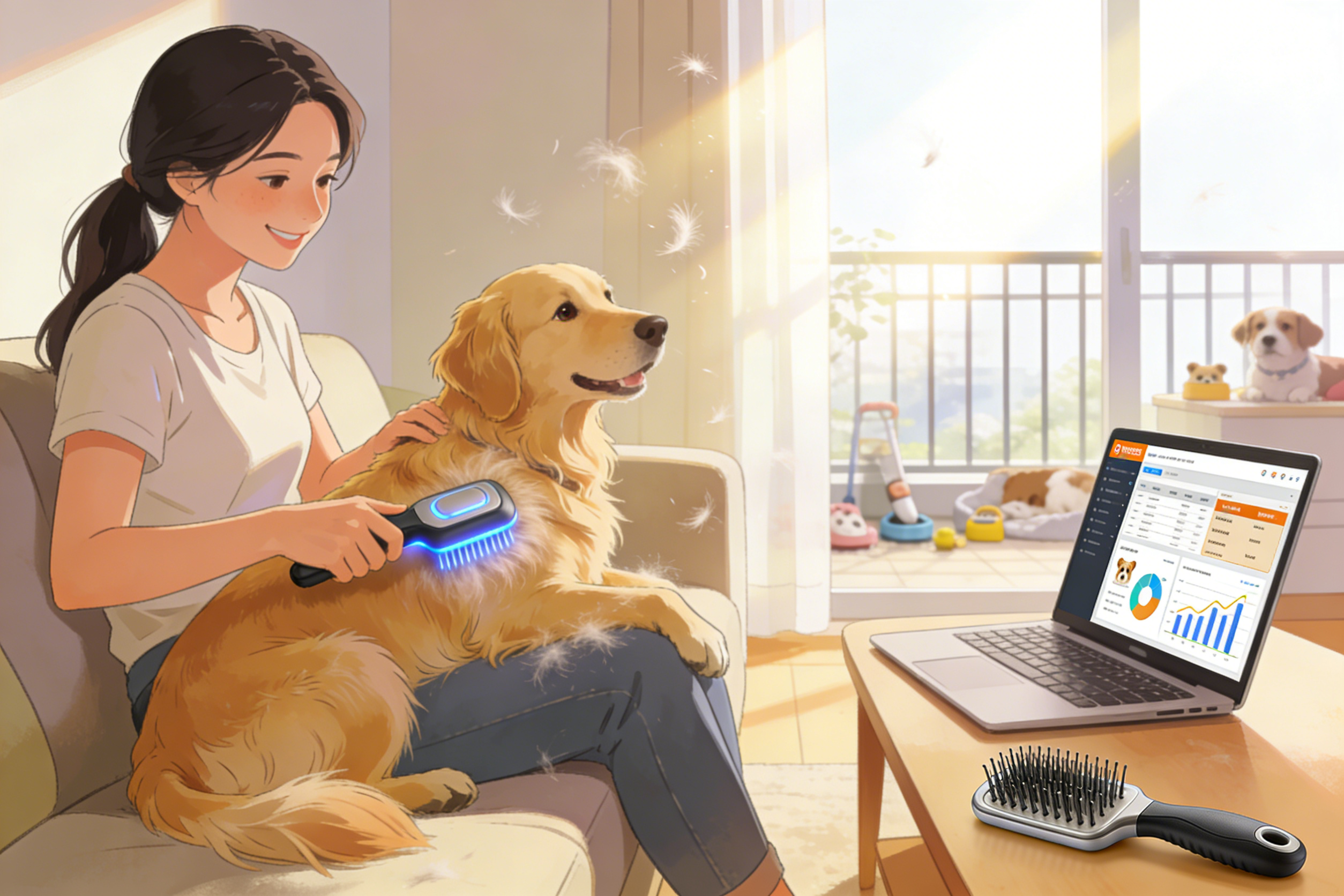
Perhaps the most innovative leap is the integration of UV light detection. Several next-gen clippers now feature built-in UV light capabilities that allow owners to check for skin health issues, such as ringworm fungi or bacterial infections, during the grooming session.
This transforms a grooming chore into a diagnostic opportunity. By combining a UV light with a "smart chip" for seamless operation, these devices allow owners to catch potential dermatological issues early, turning the clipper into a point-of-care health tool.
3. The Quiet Revolution
For cat owners, noise is a dealbreaker. Electric grinders are rapidly overtaking manual clippers in markets like the EU, now accounting for 55–60% of new purchases. However, the fear of the grinder's noise is a barrier.
The 2026 iteration solves this with low-noise motors operating below 50dB and low-vibration designs. These are combined with multi-speed settings to accommodate different nail hardnesses and pet sizes, making the experience less jarring for anxious animals. Products featuring digital battery displays prevent sudden power loss mid-trim, ensuring the owner is never caught off guard.
Data-Driven Grooming? Not Yet—But the Foundation is Being Set.
While the promotional title mentions an "Internet of Things" trend for grooming, the current data suggests that the nail clipper market is in the "Feature-Led Premiumization" phase rather than full connectivity.
However, the ecosystem is maturing. The introduction of platforms like the "Tuya Aura" AI pet companion and integrated smart pet care ecosystems at CES 2026 signal a future where grooming devices are connected to holistic health platforms. The current "smart" features—safety guards, UV detection, and battery indicators—are the hardware precursors to the data-driven "health sync" envisioned for 2027 and beyond.
Market Dynamics: Price vs. Performance
The global market reflects a distinct split:
Mass Market ($3–$8): Driven by first-time owners and price-sensitive regions (e.g., India, Southern Europe). These are basic, functional tools dominated by private-label brands.
Premium Tier ($12–$40+): Driven by "pet humanization." Here, buyers are paying for safety locks, ergonomic non-slip grips, multi-pet kits, and the integrated lighting and UV diagnostics mentioned above.
In France, for instance, clippers priced above €15 now account for 35–40% of retail value, a figure projected to hit 50% by 2030. This "mix shift" is where the real innovation is occurring.
Conclusion
The 2026 pet nail clipper is no longer just a blade; it is a precision instrument. It features smart chips for seamless LED/UV switching, safety locks for portable storage, and ergonomic handles that make steady control possible. While the "IoT" aspect is still nascent, the integration of diagnostics (UV) and safety (LED) reflects a broader shift: pet owners are demanding professional-grade safety and health insights from their home grooming tools.
The future of pet care is not about replacing the groomer, but about empowering the owner with tools that are smarter, safer, and more intuitive than ever before.