From East China Fair to Southeast Asia Pet Expo: Pet Nail Clippers Forge a Strong Export Path, as Chinese Brands Win Overseas Orders via Specialized Functionality and Branding
From OEM to OBM: The Branding Ascent
For over a decade, Yangjiang-based manufacturers—the undisputed cutlery capital of China—supplied private-label nail clippers to European and American giants. Today, that dynamic is shifting. At the ECF, multiple exporters debuted their own house brands, complete with sleek packaging, QR-code-linked video tutorials, and even replacement blade subscription services. “We used to compete on cents per unit,” said a sales director from a Guangdong factory. “Now we compete on user trust. Our brand’s nail clipper set includes a safety stop, a built-in file, and a magnifying glass—all patented. Retailers in Japan and Korea are placing repeat orders, not because we are cheap, but because we reduce pet owners’ anxiety about cutting the quick.”
This brand-centric strategy is paying off. Industry data shows that branded Chinese pet nail tools now command an average unit price of $6.80–$12.50 FOB, compared to $2.10–$3.50 for generic equivalents five years ago. More importantly, overseas distributors are actively seeking exclusive brand partnerships, a sign that “Made in China” is transitioning to “Brand from China” in the pet grooming vertical.
Functional Segmentation: One Size No Longer Fits All
The most striking feature of this year’s export offerings is hyper-specialization. No longer do manufacturers produce a single “universal” clipper for all breeds. Instead, the product lines are meticulously divided:
Mini safety clippers with rounded tips and light-touch springs, designed specifically for cats, rabbits, and small-breed puppies.
Heavy-duty forged clippers with non-slip ergonomic handles and replaceable carbide blades, targeting large-breed dogs like Mastiffs and German Shepherds.
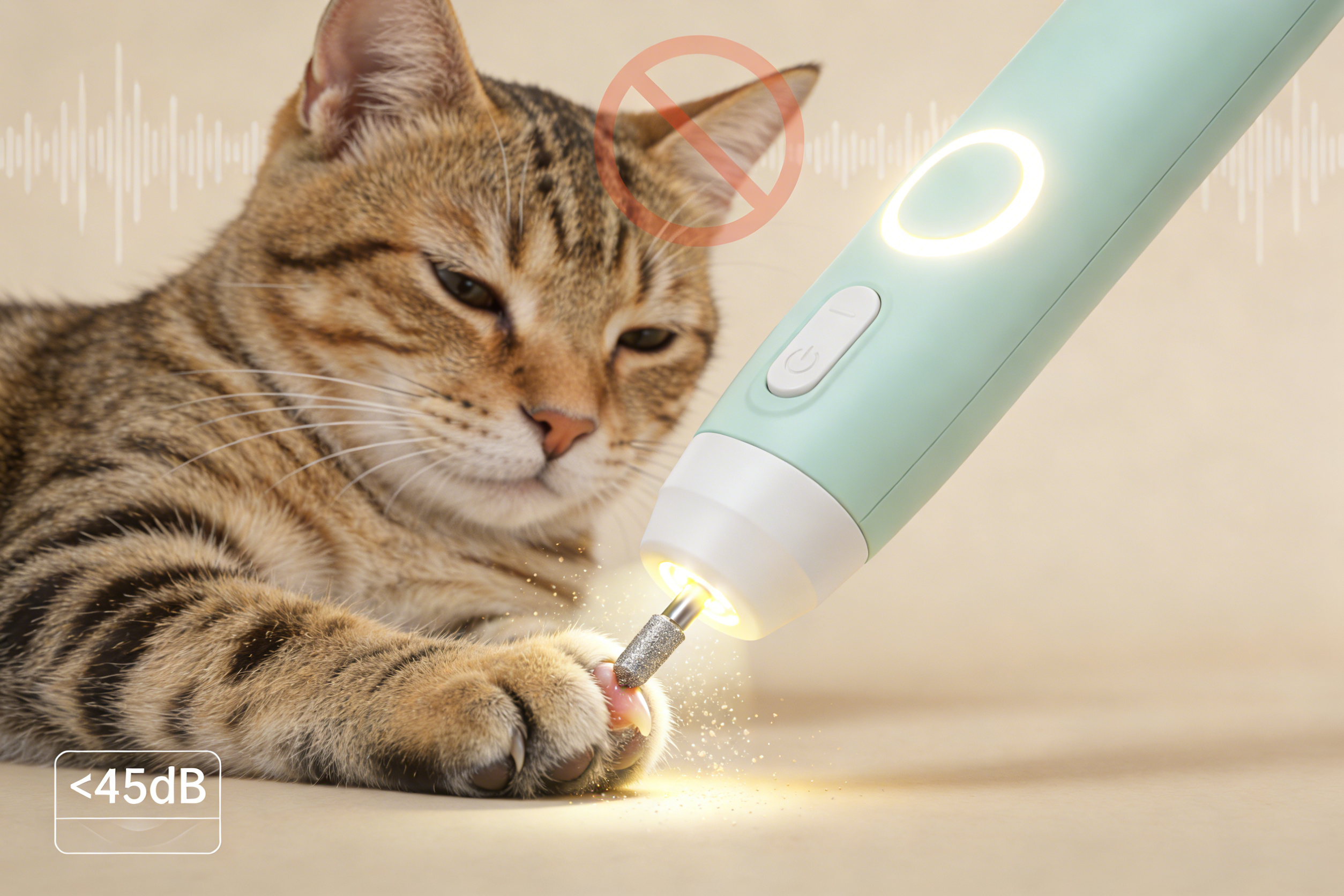
Dual-mode clipper-grinders that clip first, then rotate a diamond-bit grinder to smooth rough edges—particularly popular in Southeast Asian markets where pet owners prefer rounded nails for tiled-floor households.
Glow-in-the-dark and LED-illuminated clippers that address the common fear of cutting the quick, a feature that resonated strongly with first-time pet owners in Thailand and Vietnam.
“Southeast Asian buyers are not looking for a one-tool-fits-all solution anymore,” noted a procurement manager from a Malaysian pet retail chain at the Bangkok expo. “They ask for clippers suited to tropical humidity—rust-resistant coatings, anti-slip rubber that doesn’t degrade in heat, and blades that stay sharp after frequent sterilization. Chinese suppliers have responded faster than their European counterparts.”
Safety Innovation as the Core Selling Point
Across all conversations with overseas buyers, one word recurred: safety. Chinese manufacturers have invested heavily in quick-detection technologies. Several exhibitors showcased clippers with a built-in sensor that beeps when the blade approaches the nail’s blood vessel (via pressure feedback), while others offered transparent viewing windows on the blade guard. One Yangjiang firm even introduced a clipper with a detachable collection box, catching nail shavings to prevent mess—a small but thoughtful addition that won over Japanese houseware distributors.
These innovations are backed by rigorous testing. Exporters now routinely provide ISO 10993 biocompatibility reports for handle materials, salt-spray corrosion test results, and thousands of cycle-life tests for the spring mechanism. Such transparency builds confidence, especially in regulated markets like the EU and South Korea, where pet product safety standards are tightening.
The Southeast Asian Springboard
While North America and Europe remain large markets, Southeast Asia is emerging as the unexpected growth engine. The region’s pet population surged 18% year-over-year in 2025, with Thailand, Indonesia, and the Philippines leading in disposable pet care spending. At the Southeast Asia Pet Expo, Chinese nail clipper orders from ASEAN countries jumped 43% compared to the previous edition.
Why? Affordability meets aspiration. Middle-class pet owners in these emerging economies are trading up from basic human nail clippers to purpose-built pet tools, but they remain price-sensitive. Chinese brands, with their efficient supply chains and localized packaging (Thai, Bahasa, and Vietnamese instructions), hit the sweet spot—offering 70% of the premium Japanese/German performance at 40% of the price. Moreover, Chinese suppliers are adapting to local preferences: brighter colors, cartoon-themed handles, and bundled starter kits that include a styptic powder pen—a combination that appeals to online marketplace sellers in Shopee and Lazada.
Digital Marketing and Direct-to-Consumer Channels
Another quiet revolution is the use of digital tools. Rather than relying solely on trade shows, Chinese pet tool exporters are building direct relationships with overseas influencers. At the ECF, several exhibitors played looped videos of Southeast Asian groomers demonstrating their clippers on live streams. QR codes on product boxes lead to care guides and replacement-part ordering—a service model that fosters repeat purchases.
One Ningbo-based exporter reported that 30% of its Bangkok expo leads came from pet grooming schools and mobile grooming vans, segments that value durability and easy blade replacement. By offering bulk spare-blade packs and quick-response after-sales support via WhatsApp, Chinese companies are locking in long-term B2B partnerships that transcend seasonal orders.
Challenges and the Road Ahead
Despite the momentum, exporters remain cautious. Rising raw material costs (especially high-carbon stainless steel and tungsten carbide) and shipping route volatility continue to pressure margins. Some manufacturers are responding by shifting to locally sourced materials in Southeast Asia for final assembly, leveraging the RCEP agreement to reduce tariffs. Others are investing in automated grinding and polishing lines to maintain consistency while reducing labor costs.
Moreover, intellectual property protection is a growing concern. As Chinese brands gain recognition, copycat products have appeared in domestic e-commerce channels. Industry associations in Yangjiang and Ningbo are now coordinating with customs authorities to register design patents and utility models, ensuring that overseas buyers receive genuine, certified products.
A Clipper that Cuts Both Ways
From the exhibition floors of Shanghai to Bangkok, the narrative is no longer about “cheap Chinese clippers” but about “smart Chinese solutions.” Pet nail clippers, once an afterthought in grooming kits, have become a gateway product for Chinese brands to demonstrate precision, safety, and consumer empathy. As one Thai distributor put it, “I used to buy from Germany. Now I buy from China—not because of price, but because they ask me what my customers actually fear. And they fix it.”
That customer-centric approach, combined with technical refinement and aggressive branding, suggests that the export surge in pet nail care tools is not a fleeting trend. It is a calibrated strategy—one that clips away old stereotypes and files down the path to global recognition. And if the order volumes at this year’s expos are any indication, the sharpest edge belongs to China’s pet grooming industry.