Tiny Tools, Giant Numbers: Why Pet Nail Clippers Are Quietly Taking Over the $3.5 Billion Market
The Unsexy Product That Prints Money
Let us be honest with each other. Pet nail clippers are not glamorous. You cannot build a flashy Instagram brand around them the way you can with a $300 automatic litter box or a GPS tracking collar. They do not have flashing lights, Bluetooth connectivity, or subscription plans.
And that is precisely why they are such a good business.
Glamorous products attract competition. Every dropshipper on TikTok wants to sell the next viral gadget. Nail clippers? They fly under the radar. Big brands ignore them. New sellers overlook them. Yet every single pet owner needs them.
Think about the math for a moment.
A typical household with one dog will trim nails every two to four weeks. That is 13 to 26 trims per year. Most owners do not trust themselves with scissors-style clippers, so they buy a safety model. Then they realize the grinding attachment is useful for smoothing rough edges. Then they lose the original clipper and buy another one. Then they get a second pet.
This is not a one-time purchase. This is a consumable product disguised as a durable good.
One seller I spoke with last year runs a small operation out of a garage in Ohio. She sells only pet nail grinders. Three SKUs. No fancy branding. Her average order value is $22. Her cost per unit, landed from her supplier in Guangdong, is $4.30. She spends $200 a month on Facebook ads targeting "nervous dog owners."
She cleared $47,000 in profit last year. Alone. From a garage.
That is the opportunity hiding inside this "light and small" category.
Why Shipping Costs Made Nail Clippers the Perfect Cross-Border Product
Cross-border e-commerce has a dirty secret. Most products look profitable on paper, but by the time you pay for international freight, customs clearance, last-mile delivery, and storage fees, your margin has evaporated.
Heavy products are the worst offenders. A ceramic pet bowl set might cost $12 to manufacture and $18 to ship to a US warehouse. By the time you account for Amazon FBA fees and customer acquisition costs, you are lucky to break even.
Nail clippers laugh at shipping costs.
A master carton containing 500 units of a standard safety nail clipper weighs roughly the same as a single high-end pet hair dryer. That carton fits neatly into a 20-foot container alongside hundreds of other products. Air freight via YunExpress or DHL eCommerce? Still manageable. Some sellers ship directly via ePacket from China to consumer and keep margins above 40 percent.
This is the "light and small" advantage in action. Low weight means low shipping fees. Small dimensions mean low storage costs. Low breakability means low return rates. Low return rates mean happy account health on marketplaces.
And because the product is small, you can test new markets without risking a fortune. Want to see if pet owners in Poland will buy your clippers? Send 200 units. Want to try the Australian market? One air carton costs a few hundred dollars. Compare that to testing a bulky grooming vacuum, where a single pallet costs thousands before you sell a single unit.
The Psychology of the Nervous Pet Owner
Here is something most product researchers never consider. Pet nail clippers are not sold on features alone. They are sold on fear.
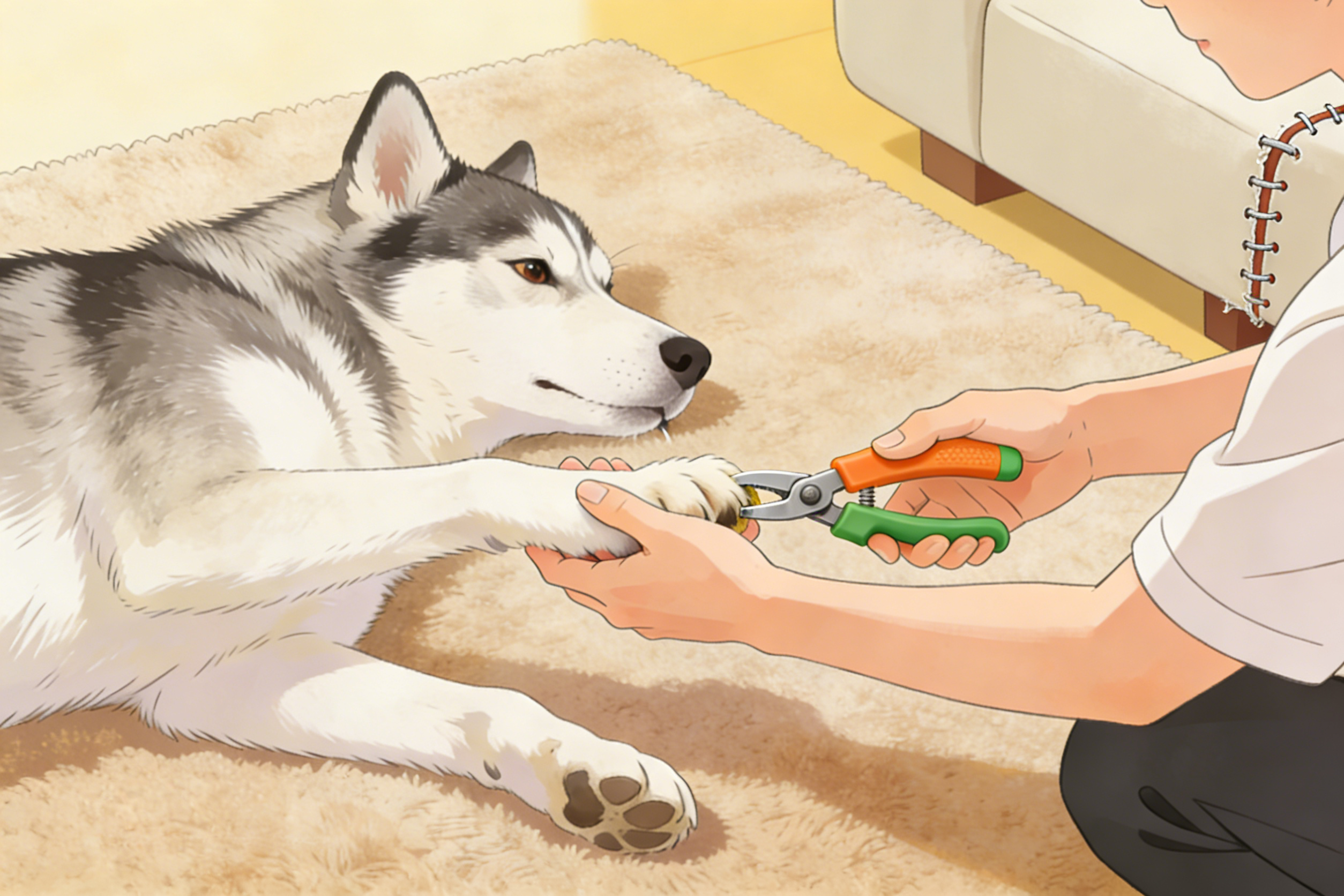
Ask any first-time dog owner what grooming task they dread most. Ninety percent will say nail trimming. The reason is simple: one wrong cut hits the "quick" — the blood vessel and nerve bundle inside the nail. That causes bleeding. The dog yelps. The owner panics. Suddenly a five-minute chore becomes a traumatic memory.
This fear creates an unusual market dynamic. Pet owners do not want the cheapest clipper. They want the safest clipper. They want the one that will protect them from their own inexperience.
That is why safety features command premium pricing.
A basic stainless steel guillotine clipper sells for $5 to $8. Add a safety guard that prevents over-cutting, and the price jumps to $12. Add a built-in LED light to illuminate the quick, and you are at $18. Add a grinder attachment with a low-noise motor, and suddenly you are selling a $35 product.
The manufacturing cost difference between the $8 version and the $35 version? Approximately $2.50.
That is the power of selling emotion instead of hardware. Customers are not paying for steel and plastic. They are paying for peace of mind. They are paying for the confidence that they will not hurt their furry family member.
The smartest sellers understand this deeply. Their product listings do not lead with blade thickness or handle material. They lead with a question: "Afraid of hurting your dog while trimming nails?" Then they show a video of a calm golden retriever sitting patiently while a gentle LED-lit grinder works its magic.
That video sells more units than any bullet point ever could.
The Grinder Revolution
For years, traditional clippers dominated the market. The guillotine style, where the nail slides into a hole and a blade drops down. The pliers style, where two curved blades meet like scissors on steroids. Both work. Both also scare a lot of pets.
The snap sound alone sends some dogs running under the couch.
Enter the nail grinder. These small rotary tools use sanding drums or diamond bits to slowly file down the nail instead of cutting it. No snap. No sudden pressure. Less risk of hitting the quick.
The first generation of grinders was terrible. They were loud. The batteries died quickly. The sanding drums wore out after two uses. Pet owners tried them, hated them, and went back to clippers.
The second generation arrived around 2019. Better motors. Quieter operation. Rechargeable lithium batteries. Interchangeable bits for different nail sizes. Safety guards that stop the grinder if the angle gets too steep.
The third generation, which is hitting the market now, is genuinely impressive. We are seeing whisper-quiet motors under 45 decibels. Built-in dust collectors to capture nail filings. LED positioning lights that automatically adjust brightness. Some high-end models now include a pressure sensor that slows the grinder when you get close to the quick.
The result? Grinder sales are growing at roughly twice the rate of traditional clipper sales in North America and Europe. In Japan and South Korea, grinders now account for more than 40 percent of all nail care tool revenue.
For cross-border sellers, this shift creates a clear opportunity. The market for grinders is still fragmented. There is no dominant brand. Customers rely heavily on reviews and recommendations. A well-executed grinder with solid quality control and thoughtful packaging can break into the top 100 pet tools on Amazon within 90 days.
I have seen it happen three times in the past eighteen months.
Regional Breakdown: Where the Money Actually Is
Not all markets are created equal. Selling the same product the same way in every country is a recipe for mediocre results. Here is what the regional landscape actually looks like for pet nail clippers in 2026.
United States and Canada
The North American market is mature, competitive, and highly review-driven. Customers expect fast shipping (two days or less for Prime), easy returns, and generous warranties. The winning strategy here is bundling — clipper plus grinder plus nail file plus styptic powder in a branded box. Average selling price target: $24 to $35. Key differentiator: video tutorials and customer support.
Germany, UK, France
European buyers are more patient with shipping but less patient with wasteful packaging. A nail clipper wrapped in three layers of plastic and stuffed into an oversized box will earn one-star reviews for environmental reasons. The winners in Europe use recycled cardboard, minimal plastic, and clear sustainability claims on the listing. Price sensitivity is lower than the US. A well-presented bamboo-handle clipper can sell for $28 where a plastic version struggles at $15.
Japan and South Korea
These markets want quiet, compact, and precise. Apartment living means noise matters. Small homes mean storage matters. The winning products are cordless grinders that charge via USB-C, fit in a drawer, and operate below 50 decibels. Color options matter more here than anywhere else — pastel pink, mint green, and warm gray consistently outsell black and white. A note for sellers: customer service expectations are extreme. A slow response to a message can tank your seller rating.
Australia and New Zealand
The pet ownership rate in Australia is one of the highest in the world — nearly 70 percent of households have a pet. Shipping to Australia is expensive but manageable for light products. The real opportunity is in rural areas, where professional grooming services are hours away. These customers are willing to pay a premium for durability and clear instructions. Bundle a laminated quick-reference card with your clippers, and you will outsell competitors who skip the educational component.
Southeast Asia (Indonesia, Thailand, Vietnam, Philippines)
This is the dark horse region. Rising middle-class incomes and rapidly growing pet ownership are creating demand where little existed five years ago. Price sensitivity is high. The sweet spot is $6 to $12 for a basic safety clipper. But here is the interesting part: social commerce dominates. Customers buy directly from TikTok shops, Facebook Marketplace, and WhatsApp groups. The sellers winning in this region are not optimizing for Amazon search algorithms. They are posting short videos of local pets getting calm, stress-free nail trims.
The Niche Strategy That Actually Works
Most sellers enter the nail clipper market with one product aimed at "dogs." Then they wonder why they cannot compete on price with the thousand other sellers doing the same thing.
The answer is specialization.
Here are five niche angles that are working right now, backed by real sales data from multiple marketplaces.
1. Cat-only clippers
Cats have curved, hooked claws that retract into the paw. Dog clippers have straight blades designed for round, exposed nails. Using dog clippers on a cat is frustrating for the owner and uncomfortable for the cat. A dedicated cat nail clipper with a curved blade and a smaller safety opening commands 30 to 50 percent higher prices than a generic alternative.
2. Extra-large breed tools
Great Danes, Mastiffs, and Saint Bernards have nails as thick as a human pinky finger. Standard clippers cannot handle them. Owners of giant breeds actively search for "heavy duty extra large dog nail clippers" and are frustrated by the lack of options. A properly engineered clipper with reinforced pivot joints and a wide blade opening can sell for $45 to $60 with almost no competition.
3. Senior pet tools
Older pets have thicker, more brittle nails. They also have arthritis, which makes holding still for a trim painful. Senior pet owners need tools with extra leverage (longer handles) and gentler cutting action (ratcheting mechanisms that cut slowly). This is a small market but a desperately underserved one. Customer loyalty is extreme.
4. Portable travel grinders
People who hike, camp, or travel frequently with their pets do not want to pack a full-size grinder. They want a tiny USB-chargeable device that fits in a glove compartment. The key feature here is not power — it is convenience. A magnetic charging dock and a protective carrying case turn a $15 grinder into a $30 travel kit.
5. Professional refill packs
Nail grinders require replacement sanding drums or diamond bits. Most sellers ignore this recurring revenue opportunity. The smart ones create subscription listings: "Receive four replacement grinding drums every three months for $9.99." Low effort, high lifetime value, and customers appreciate not having to remember to reorder.
A Realistic Roadmap for New Sellers
If you are reading this and thinking about entering the pet nail clipper market, here is a step-by-step roadmap that does not require a huge upfront investment.
Month one: Research and sampling
Order samples from at least five suppliers on 1688 or Alibaba. Do not just look at price. Test the cutting action. Test the noise level. Check the packaging quality. Pay attention to the instruction manual — bad instructions generate customer service headaches. Select two products to move forward with.
Month two: Listing creation
Hire a freelance photographer on a platform like Fiverr or Upwork to shoot lifestyle images with a real pet. Stock photos do not convert. Produce a 60-second video showing the product in use. Write your listing copy around the customer's fear, not the product's features. "Never worry about hurting your dog again" is a stronger headline than "Precision ground stainless steel blades."
Month three: Soft launch
Launch on one marketplace only. Amazon or eBay or Shopee, depending on your target region. Run a small Facebook or TikTok ad campaign targeting pet owners within 20 miles of a major city. Why local? Because you want fast shipping for your first reviews. Pay friends with pets to buy at full price and leave honest reviews. Aim for ten reviews with an average of 4.5 stars or higher.
Month four to six: Scale
Once you have verified reviews, expand to additional marketplaces. Add a bundle option. Introduce a subscription for refill parts. Increase your ad spend gradually while monitoring your ACOS (advertising cost of sale). If your unit economics work, consider applying for Amazon Vine or similar programs to accelerate review growth.
Month seven to twelve: Expand the line
Introduce a second product — perhaps a grinder if you launched with clippers, or a travel size version. Existing customers are your cheapest source of new sales. Email them an offer. Give a discount for repeat purchases. Build a brand, not just a listing.
This roadmap is realistic. It requires patience and attention to detail. But it does not require venture capital, a warehouse, or a team of employees. One person with a laptop and a supplier relationship can build a six-figure business in this category within twelve months.
I have watched it happen.
The Bottom Line
The headline says $3,511 million by 2032. That number is impressive, but it is also abstract. What matters is what sits beneath it: millions of pet owners buying small, simple tools to solve a real, recurring problem.
Pet nail clippers will never be glamorous. They will never be featured in a Super Bowl commercial. No venture capitalist will write a glowing case study about them.
But they will keep selling. Day after day. Week after week. To first-time puppy owners and experienced rescue parents. To apartment dwellers in Tokyo and farm owners in Texas. To people who are afraid of hurting their pets and people who simply want the chore to be over faster.
That is the real story of this market. Not the big round number. The small, steady, overlooked product that quietly does the job.
If you want to build an e-commerce business that lasts, stop chasing the shiny object. Start chasing the product every pet owner actually needs.
The nail clipper is waiting.