Beyond the Snip: Why the $18.8 Billion Pet Industry is Ditching Old Nail Clippers for “Safety First” Tech
The Anatomy of Fear: Why Traditional Tools Fail
To understand the rise of the "Zen Clipper" or the "Quick Finder," you first have to understand the universal dread associated with the old ones .
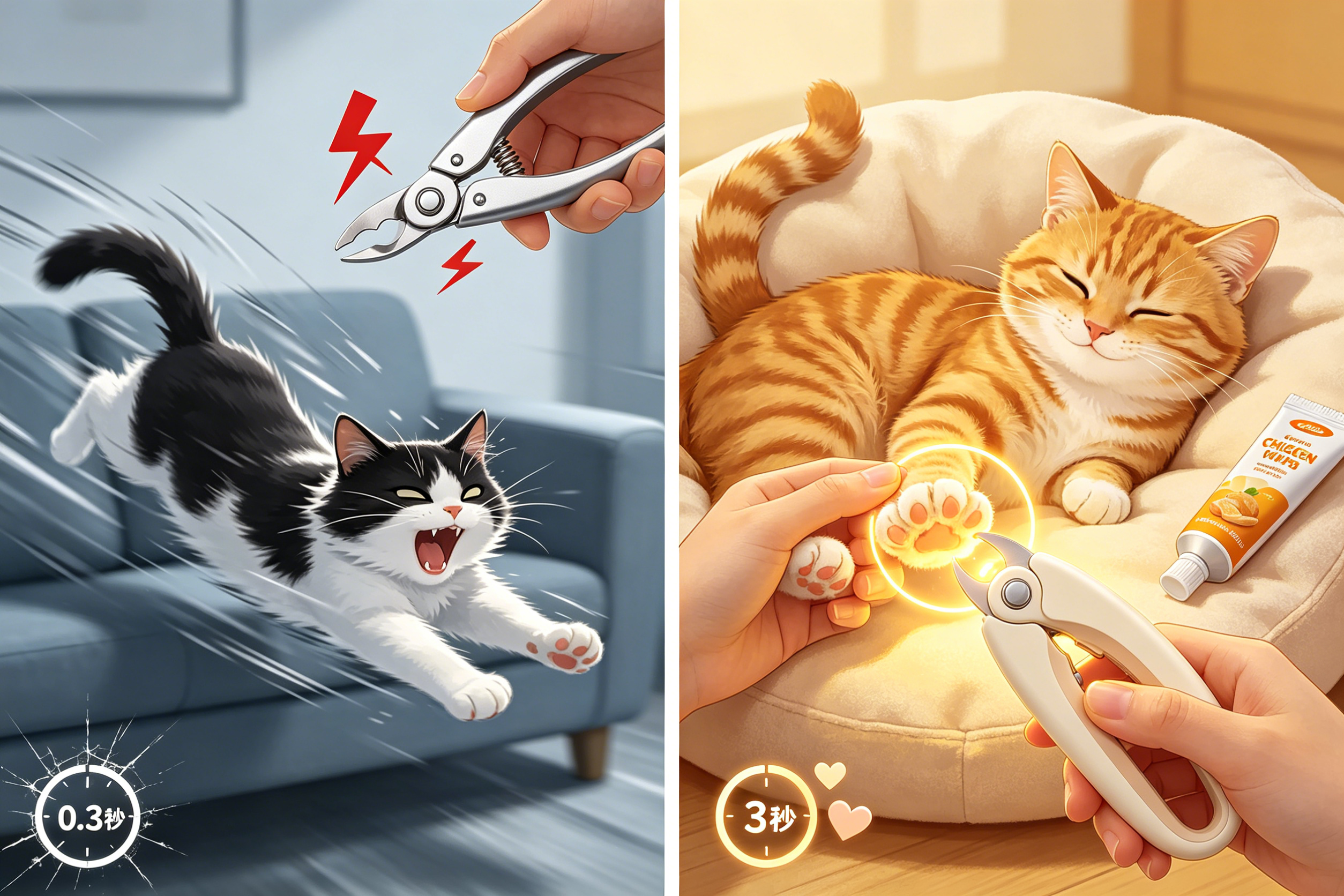
Traditional nail clippers, whether the scissors type for small breeds or the guillotine type for larger ones, operate on a single principle: pressure . They crush and cut. For a dog or cat, the "click" of a closing blade is often associated with the sharp, sudden pain of hitting the quick—the sensitive bundle of nerves and blood vessels inside the nail .
For owners, the fear is bleeding. For pets, the fear is pain. Once a negative association is formed, a routine grooming session turns into a wrestling match. This is why, for years, experts recommended grinders (Dremels) as a safer alternative, despite their noise and time consumption . The market realized that while grinding solves the bleeding issue, it doesn't solve the "time-strapped pet parent" issue.
Enter the Safety Clipper—a product category designed to bridge the gap between the speed of a blade and the safety of a grinder.
The Tech that Saves the Quick
The core innovation driving this market disruption is visualization and limitation.
Innovative products like the Petkit LED Pet Nail Clipper Pro are changing the physics of the task. By integrating high-intensity LED lights into the clipper mechanism, these tools illuminate the nail from underneath . This "backlight" effect renders the opaque nail translucent, allowing the owner to see the shadow of the quick. When you can see where the nerve ends, you no longer have to guess where to cut.
Simultaneously, mechanical innovations such as the Zen Clipper have introduced adjustable blades. These clippers feature a simple dial that limits how much of the nail tip enters the cutting zone . It acts as a physical barrier; even if your dog jerks their paw, the blade cannot close far enough to reach the quick.
As noted in market reports from France to North America, the demand for "portable" and "precision" tools is driving a premiumisation trend. Owners are willing to pay a premium for a $20–$30 clipper if it guarantees a stress-free experience, moving away from the $5 basic models that litter pet store bins .
The Psychology of the Modern Pet Parent
The shift in the grooming market isn't just about product features; it’s about demographics.
The modern pet owner (Millennials and Gen Z) treats their pet as a child. They are willing to spend $150 billion annually on their animals, but only if that spending improves the pet's quality of life and the owner's convenience . They are looking for trust in a tool.
Market data indicates that pet expenditure is rising due to "pet humanization" . Owners want to groom at home to bond with their pet, but they are terrified of hurting them. The traditional clipper represents risk; the safety clipper represents relationship building.
The Verdict: A Market on the Rise
As the Pet Grooming Services Market grows at a CAGR of 7.2% (to nearly $12 billion by 2032), the at-home grooming sector follows suit . With services like mobile grooming becoming expensive, the "hybrid" pet parent (who does basic care at home but uses pros for the rest) is looking for professional-grade, idiot-proof tools.
The move away from traditional clippers is permanent. We are seeing a convergence of trends: the sharpness of a surgical steel blade, the control of a limiter, and the visibility of LED lights.
In 2026, the best pet nail clipper isn't the one that cuts the fastest—it’s the one that prevents the cut entirely. As the market pushes toward $200 billion, the "Safety Clipper" is no longer a luxury; it is the new standard.
Key Takeaways for Buyers:
Look for Lights: Brands like Petkit and Miracle Care are leading the pack with Quick Sensor technology that changes color or illuminates the quick .
Adjustability is Key: If you have a wiggly dog, a clipper with an adjustable blade limiter (like Zen Clipper) is a game-changer .
Material Matters: High-quality stainless steel blades (often found in Dutch or US-made tools) prevent the nail from shattering, which is a common issue with cheap castings .
The future of pet nails is bright—literally.