From OEM to Global Brand: How Chinese Pet Nail Clipper Manufacturers Are Seizing the "Pet Economy" Boom
The Engine Driving Global Demand
The "pet economy"—or "it economy" as it's colloquially known—is expanding at an unprecedented rate. The global pet用品 (supplies) market is valued at over $44 billion, and this figure continues to rise as pets are increasingly treated as family members . This emotional connection has fundamentally changed consumer behavior. Pet owners are no longer satisfied with basic, utilitarian tools; they demand precision, safety, and aesthetics. A simple, cheap nail clipper is no longer enough. They want a tool that looks good, feels good in the hand, and, crucially, won't hurt their beloved companion.
The "Great Wall" of Innovation
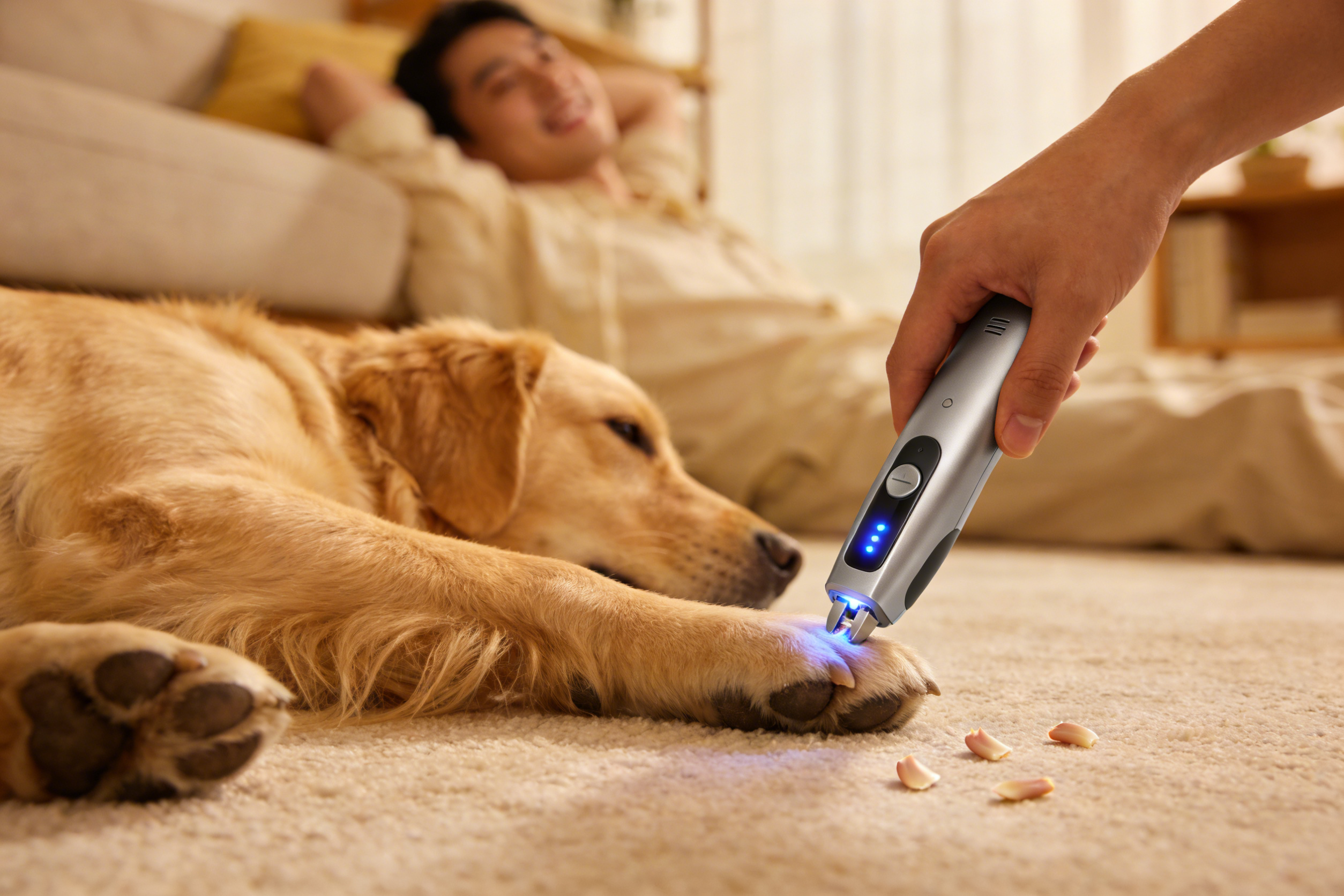
Chinese manufacturers, historically reliant on OEM (Original Equipment Manufacturer) models, are pivoting to meet this demand. This transition is evident in the evolution of the product itself. Let's look at the modern nail grinder.
The Motor is the "Heart"
Ningbo Aikeliupu, a high-tech enterprise that transitioned from human hairdressing appliances to pet tools in 2015, has seen explosive growth by focusing on core components. "The blade and the motor are the core components. In the past three years, we have invested millions annually in developing new motors and blades," explains General Manager Wu Haoze . They now produce over 30 types of blades and utilize various motors—from brushless to magnetic levitation—to match the specific needs of different coat types. A magnetic levitation motor, for instance, offers more "torque and faster speed," preventing the device from jamming in thick fur . This level of technical sophistication is what sets modern Chinese tools apart from cheaper alternatives.
The "All-in-One" Revolution
Perhaps the most significant innovation in the clipper and grinder space is the integration of functions. The same Ningbo factory has created a "pet hair vacuum grooming tool" that simultaneously clips nails and removes flying fur, solving a major pain point for pet owners—the mess . This device became a European sales champion on Amazon in 2024, proving that innovation, not just cost, is the new currency .
The "Painful" Journey from OEM to OBM
The path to brand dominance is not without its challenges. For years, Chinese manufacturers were content to be the silent partners, making products for Western brands. This is the "OEM trap" of the "微笑曲线" (Smiling Curve), where production holds the lowest value while design and branding capture the highest profits .
The Case of Yuanfei Pet
Yuanfei Pet, a listed company, exemplifies this transition. Initially a pure OEM supplier to giants like Walmart and PetSmart, it has successfully pivoted. While its 2025 revenue grew to 1.73 billion RMB, net profit dropped due to a massive 166.6% increase in sales expenses as it invested heavily in building its own brand . This is the "toll" of transitioning. "In the past, we only needed to produce; now we have to constantly push new products and handle marketing," says a manager from a pet apparel company, reflecting the industry's new reality .
The Compliance Hurdle
Moreover, the global landscape is changing. The EU’s Deforestation Regulation (EUDR) is a new compliance hurdle for wooden pet products, adding to the cost of doing business and forcing companies to re-evaluate their supply chains . For the nail clipper industry, this means an even greater push towards sustainable materials and ethically sourced components.
Winning the Global Order
So, how are these tools securing global orders?
1. Data-Driven Differentiation
Instead of a one-size-fits-all approach, successful companies are adapting. One Chinese company, Shandong Xinhua, adjusts its silica gel cat litter for different markets—larger granules for Europe (emphasizing durability), smaller for North America (for speed), and low-dust formulas for China . For nail clippers, this translates to adjusting blade sharpness for different nail types, offering ergonomic handles for different hand sizes, and providing colorful designs for the lifestyle-focused Western market versus more classic designs for Asia.
2. Smart Tech Integration
Intelligence is a key differentiator. Smart feeders and litter boxes already dominate the high-end market . For nail clippers, this might mean embedding sensors to detect the "quick" (the sensitive part of the nail) to prevent bleeding, or connecting the device to an app to track your pet's nail growth and health. This transforms a simple tool into a health monitoring device, justifying a higher price point.
3. Marketing to the "Lazy Economy"
The new breed of pet owners is looking for convenience. The "vacuum nail grinder" is a direct response to this . It acknowledges that modern pet owners want efficiency and cleanliness. This is a direct shift from "why buy this" to "why didn't I have this sooner?"
4. The "Guanxi" of B2B
At trade shows, the interaction is changing. Clients from Japan and South Korea show strong loyalty . The shift from exchanging paper brochures to using WeChat to share digital catalogs shows a more efficient, modern business style that builds trust through flexibility.
The Future: The "Beast" of Brands
The shift from "selling products" to "selling brands" is complete. In 2026, a Chinese nail clipper is no longer a sign of a cheap substitute; it is a technologically advanced tool that rivals any Western competitor. With companies now investing in R&D, design, and aggressive marketing, they are building a brand reputation that commands loyalty.
The industry has moved from being a quiet cog in the global machine to a sophisticated competitor. The message to the world is clear: Chinese pet tools are not just affordable; they are innovative, reliable, and the future of pet care. This is the "coming out party" for Chinese manufacturing, proving that it can lead in quality, technology, and heart. The "it economy" is not just about giving pets better lives; it is about giving Chinese companies a seat at the top table of global commerce.