Grooming Tools Lead the Way: How Chinese Pet Brands are Capturing the Global Market with Niche Specialization
From Followers to Contenders: The Dark Horse Rise of Pet Grooming Tools
For the past decade, the global pet supplies market seemed settled. The high-end professional tool segment was dominated by Western brands, while the mid-to-low-end market was flooded with generic OEM products. This landscape is now shifting.
Chen Ming, head of a Ningbo-based company specializing in pet grooming tools, reveals that three years ago, their products were mainly exported via OEM contracts, with profit margins below 10%. Today, their self-developed line of low-noise pet clippers sells directly to over 40 countries in Europe and North America via cross-border e-commerce, boasting profit margins over 30% and year-on-year growth exceeding 50% for three consecutive years.
"The key was identifying a specific pain point overlooked by global brands—noise control," Chen explains. "Pets are highly sensitive to high-frequency noise. By improving motor structure and damping materials, we reduced operational noise by 60%. This single improvement directly appealed to professional groomers and pet owners."
Similar stories are unfolding across China. In Guangzhou, a company developed a smart deshedding tool that automatically adjusts power based on pet coat density. In Shenzhen, a team engineered a professional pin brush with a special angle design that effortlessly removes undercoat without irritating the skin. In Jiangsu, a manufacturer launched a series of shears with ergonomic handles designed for the long working hours of professional groomers.
This innovation is not accidental. According to data from the China Pet Industry Alliance, China's pet supplies export value grew 37% year-on-year in 2022, with pet grooming tools surging 62%, making it the fastest-growing sub-category. On international e-commerce platforms like Amazon and Chewy, the review counts and star ratings for Chinese-brand grooming tools are rapidly catching up with traditional international leaders.
The "Specialization, Refinement, Uniqueness, and Innovation" Playbook: A Four-Dimensional Innovation Path
The breakthrough of Chinese pet companies stems from a clear "Specialization, Refinement, Uniqueness, and Innovation" methodology:
1. Material Science Breakthroughs: A Dalian-based company developed a ceramic blade technology that is not only more durable and sharper but also reduces static electricity generation during trimming, minimizing pet discomfort. This technology originated from collaboration with a local materials research institute, adapting aerospace-grade materials for civilian use.
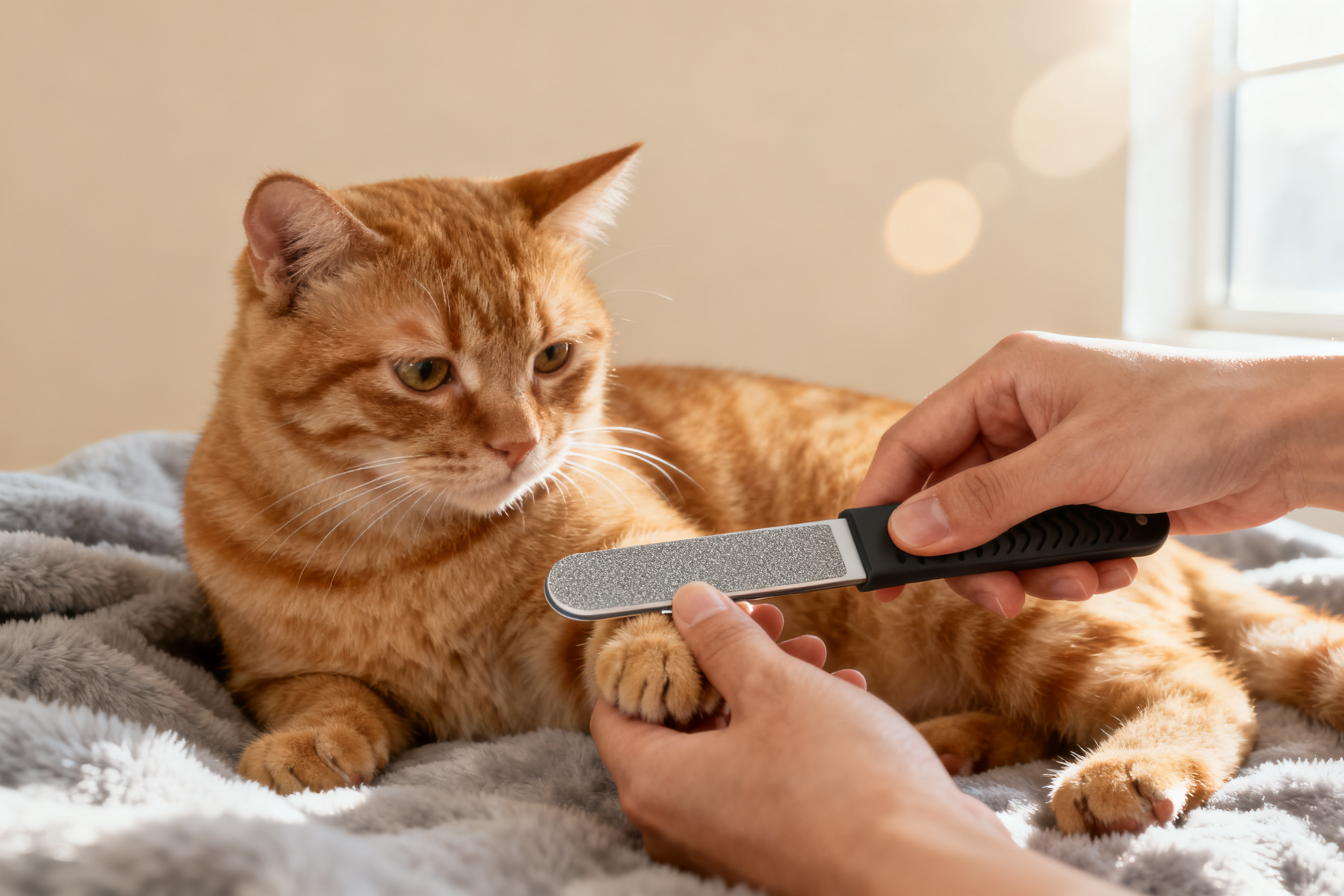
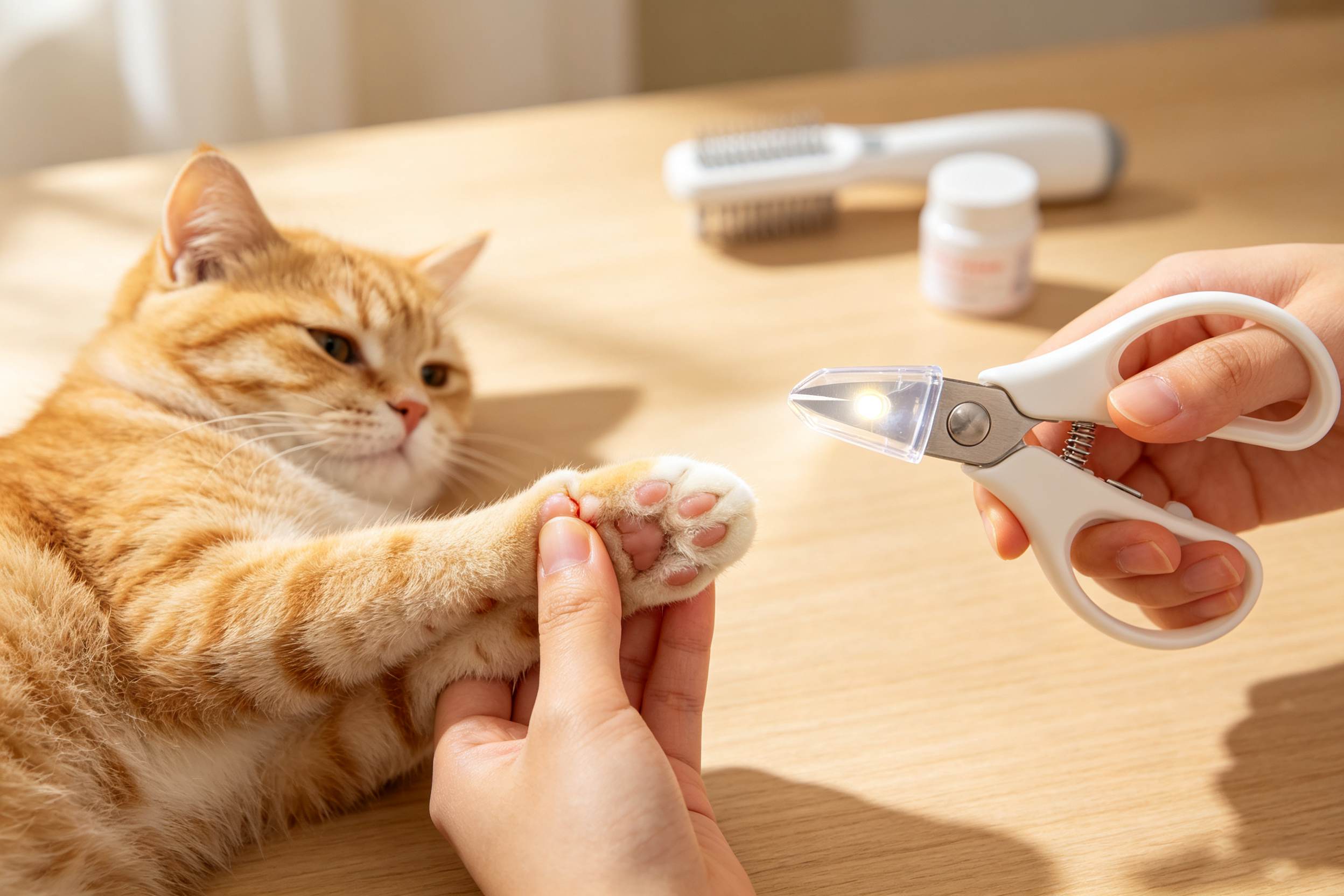
2. Deep Cultivation of Niche Scenarios: Unlike international brands that pursue "one-size-fits-all" products, Chinese companies focus intensely on specific scenarios. Examples include tangle-free combs for long-haired cats, low-angle nail clippers designed for senior pets' joint care, and anti-fatigue shears for groomers' extended use.
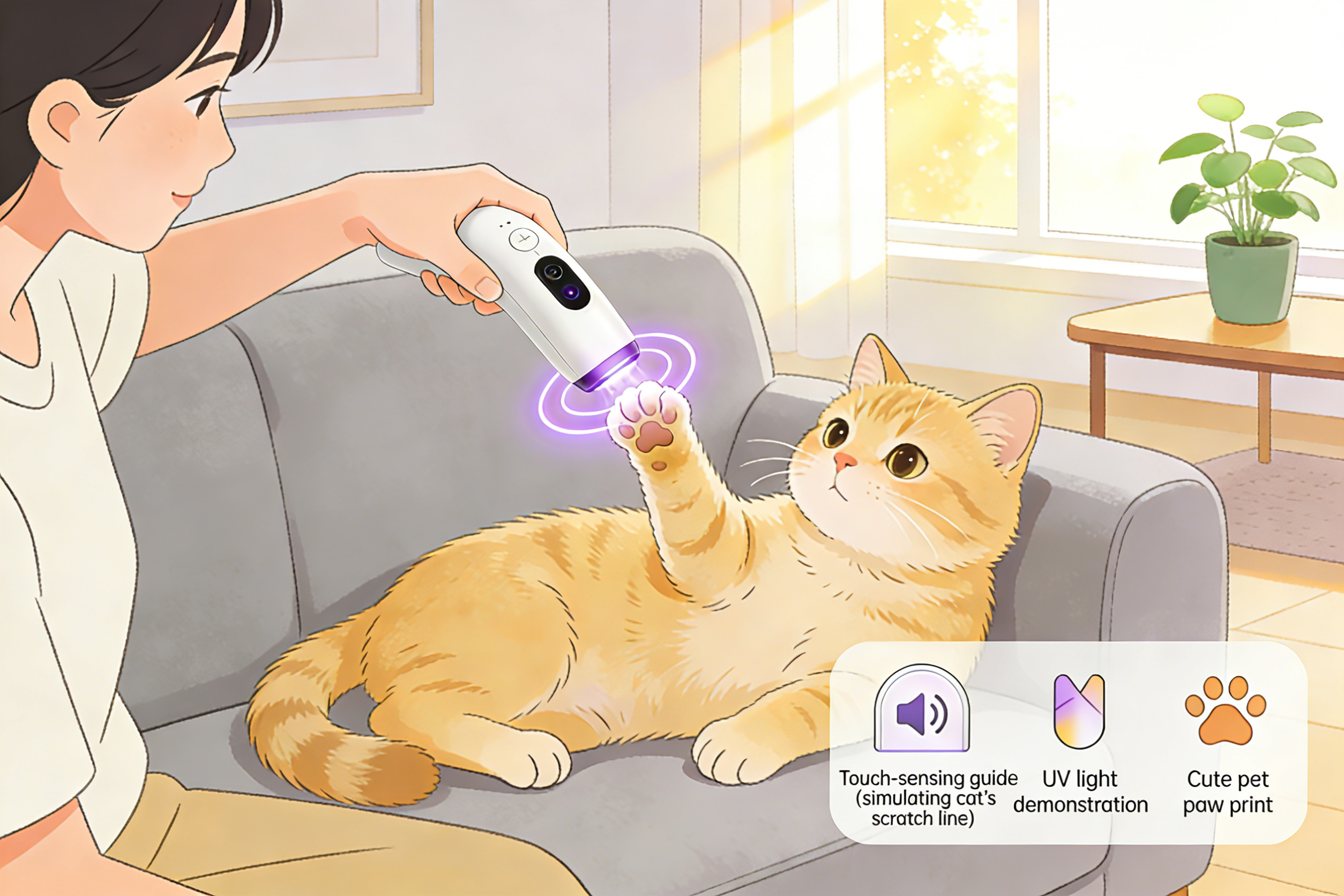
3. Integration of Intelligence: A Hangzhou startup launched a smart pet brush with built-in sensors that collect skin health data, providing care recommendations via a companion app. This "hardware + data + service" model is building a new competitive moat.
4. Design Thinking Revolution: Chinese teams pay closer attention to the physical characteristics of Asian breeds and local usage habits. Examples include specialized shears for the unique coat textures of popular breeds like Bichon Frises and Poodles, handle designs considering the average hand size of Asian users, and aesthetic designs incorporating Eastern sensibilities.
Cross-Border E-commerce: From Sales Channel to Brand Incubator
The rise of cross-border e-commerce has provided Chinese pet companies with direct consumer access, evolving into a powerful brand incubation platform.
"In the traditional export model, multiple layers of intermediaries stood between us and the end-consumer, making direct feedback difficult," said Li Na, cross-border e-commerce lead for a Xiamen-based pet supplies company. "Now, through platform data, we see in real-time which features are popular and what specific needs exist in different regions. Our product iteration cycle has shortened from 18 months to just 6 months."
Chinese companies are leveraging cross-border e-commerce to craft a new brand narrative—not as "cheap alternatives," but as "professional solutions for specific pain points." Some brands collaborate with overseas pet groomers on social media for product reviews and tutorial sharing. Others build "co-creation" brand images by gathering feedback through user communities.
Challenges and the Future: Building a Sustainable Innovation Ecosystem
Despite impressive progress, challenges remain. International brands still hold stronger brand recognition in the premium segment. Quality biases against Chinese products persist in some overseas markets. Rising raw material costs and cross-border logistics volatility also pressure businesses.
Industry experts point out that Chinese pet companies need to build a sustainable innovation ecosystem:
Deep Industry-University-Research Integration: Innovation in pet products involves interdisciplinary knowledge spanning material science, animal behavior, and industrial design, requiring tighter collaboration mechanisms.
Participation in Standard-Setting: Moving from being "rule followers" to "co-creators of rules" by actively participating in the development of international pet product standards.
Leveraging the Domestic Market: As China's pet market matures, domestic demand will become a crucial testing ground and feedback source for innovation.
Commitment to Sustainability: Eco-friendly materials, recyclable designs, and circular economy models will become key competitive dimensions.
From "Made in China" to "Created in China": The Global Lessons in a Pet Brush
A simple pet brush reflects the broader transformation of Chinese manufacturing. The "Specialization, Refinement, Uniqueness, and Innovation" path of Chinese pet companies signifies a shift from scale advantage to innovation advantage, from cost competition to value competition, and from supply chain participants to brand creators.
At the Shenzhen Pet Products Fair, a German buyer summarized the change: "Five years ago, I came here mainly looking for low-cost alternatives. Today, I come here to find genuine innovation."
The global pet economy is projected to exceed $350 billion by 2025, with supplies accounting for roughly 40%. In this vast blue ocean, the impact of the Chinese "Specialization, Refinement, Uniqueness, and Innovation" strategy is just beginning to be felt. In the movement of a brush or the snip of a shear lies not just the grooming of a pet, but the reshaping of the "Made in China" image—starting from meticulous details, with a professional spirit, to create indispensable value.
In the future, scenes like this may become common: at a pet grooming salon in New York, a pet store in Paris, or a pet exhibition in Tokyo, a professional groomer picks up a pair of Chinese-made pet shears, appreciating the comfort of its ergonomic handle and the smooth cut of its specially treated steel. In these unassuming moments, the steadfast journey from "Made in China" to "Created in China" will be quietly affirmed.