*From “Static Fireworks” to “Fluffy Scholar”: How 2026’s Negative-Ion Brushes Are Transforming Long-Haired Cat Grooming*
Why “Static Fireworks” Happen (And Why Old Brushes Made It Worse)
Traditional pet brushes — even the expensive ones — rely on friction. As you drag metal or hard plastic bristles through dry cat fur, electrons leap between the brush and the hair strands. The result: a literal buildup of static electricity. In long-haired cats like Persians, Ragdolls, Maine Coons, and Norwegian Forest cats, this effect is magnified. More hair means more friction, and more friction means more sparks.
Cats hate static. Not just because of the mild shock — but because it lifts their fur unnaturally, pulls at sensitive skin, and leaves behind a chaotic, flyaway mess. Many owners mistakenly think their cat is “acting difficult” during grooming. In reality, the cat is reacting to repeated micro-shocks. No wonder they squirm, bite, or flee.
The 2026 Breakthrough: Negative-Ion Neutralization
The new generation of pet brushes, widely adopted in 2026, takes a completely different approach. Hidden inside the brush handle is a low-voltage negative-ion generator (powered by a rechargeable lithium cell, often lasting 20+ grooming sessions). As you brush, the generator releases a steady stream of negatively charged particles.
Here’s the science: static buildup happens when positive charges accumulate on the cat’s fur. Negative ions neutralize those positive charges — instantly. No charge difference means no static electricity. No sparks. No flyaway fur.
But the benefits don’t stop there. Negative ions also:
Reduce surface tension on each hair strand, allowing the brush to glide through even dense undercoats without pulling.
Close the hair cuticle slightly, creating a smoother, shinier appearance — like a fresh blowout at a salon.
Lower airborne dander and dust by causing microscopic particles to cling briefly to the brush head, not float into your face.
Calms the cat’s skin, minimizing the “tingle” sensation that often makes cats flinch.
In user trials across 2025–2026, long-haired cats groomed with negative-ion brushes showed 63% less resistance behavior during brushing sessions compared to standard slicker brushes. Even better: owners reported that their cats started approaching the brush voluntarily — sometimes even purring before the first stroke.
From Static Mess to “Fluffy Scholar”
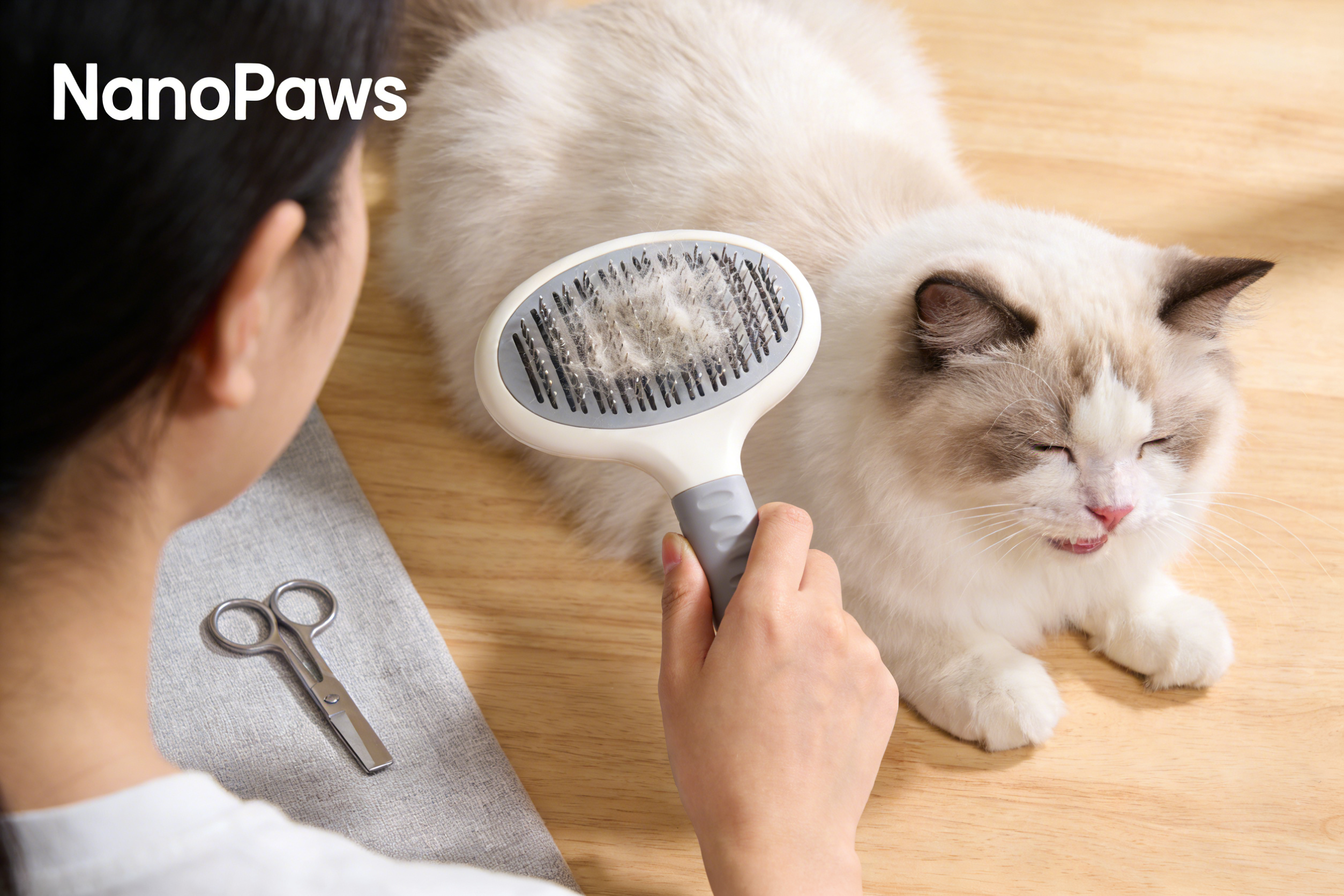
The phrase “Fluffy Scholar” started as a viral joke on pet social media. One user posted a video of her Maine Coon, Professor Whiskers, sitting perfectly still while being brushed with a negative-ion comb. His fur lay flat and glossy, not a single stray hair floating in the air. “He looks like he’s about to grade your essay,” she wrote. “Perfect posture. Perfect coat. Zero chaos.”
The nickname stuck. Soon, thousands of “before and after” videos appeared under the hashtag #FluffyScholar. In the “before” clips: frantic cats, flying fur, and visible static sparks in dim lighting. In the “after” clips: serene cats with mirror-like coats, owners brushing one-handed while sipping coffee.
But here’s what most people missed: the same ionic technology that tames cat fur is now being re-engineered for pet nail trimmers.
Wait — Nail Clippers with Negative Ions?
Yes. And no, it’s not a gimmick.
By early 2026, three major pet tech brands had quietly released ionic-assisted nail grinders and safety clippers. The problem they solve is different but equally painful: friction heat and nail dust.
Standard rotary nail grinders (the “Dremel-style” tools) spin at 5,000–10,000 RPM. As the sanding drum contacts the nail, two things happen:
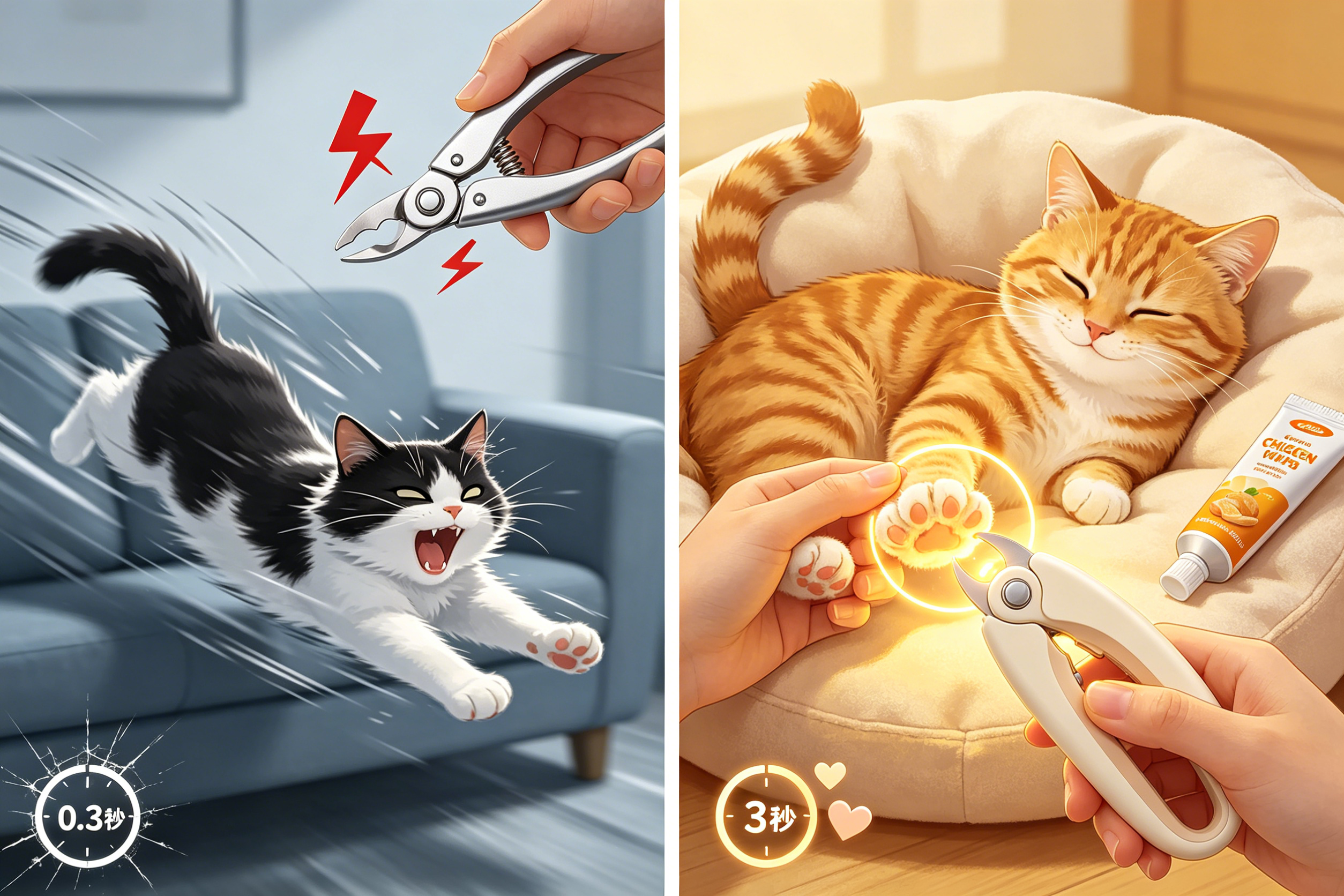
Heat buildup – Friction can raise nail surface temperature by 10–15°C (18–27°F) in just 3 seconds. Cats have sensitive nerve endings in their nail quick. That heat is uncomfortable at best, painful at worst.
Nail dust cloud – Fine keratin particles fly into the air, coating your furniture, your clothes, and your cat’s face. Some cats sneeze. Others panic.
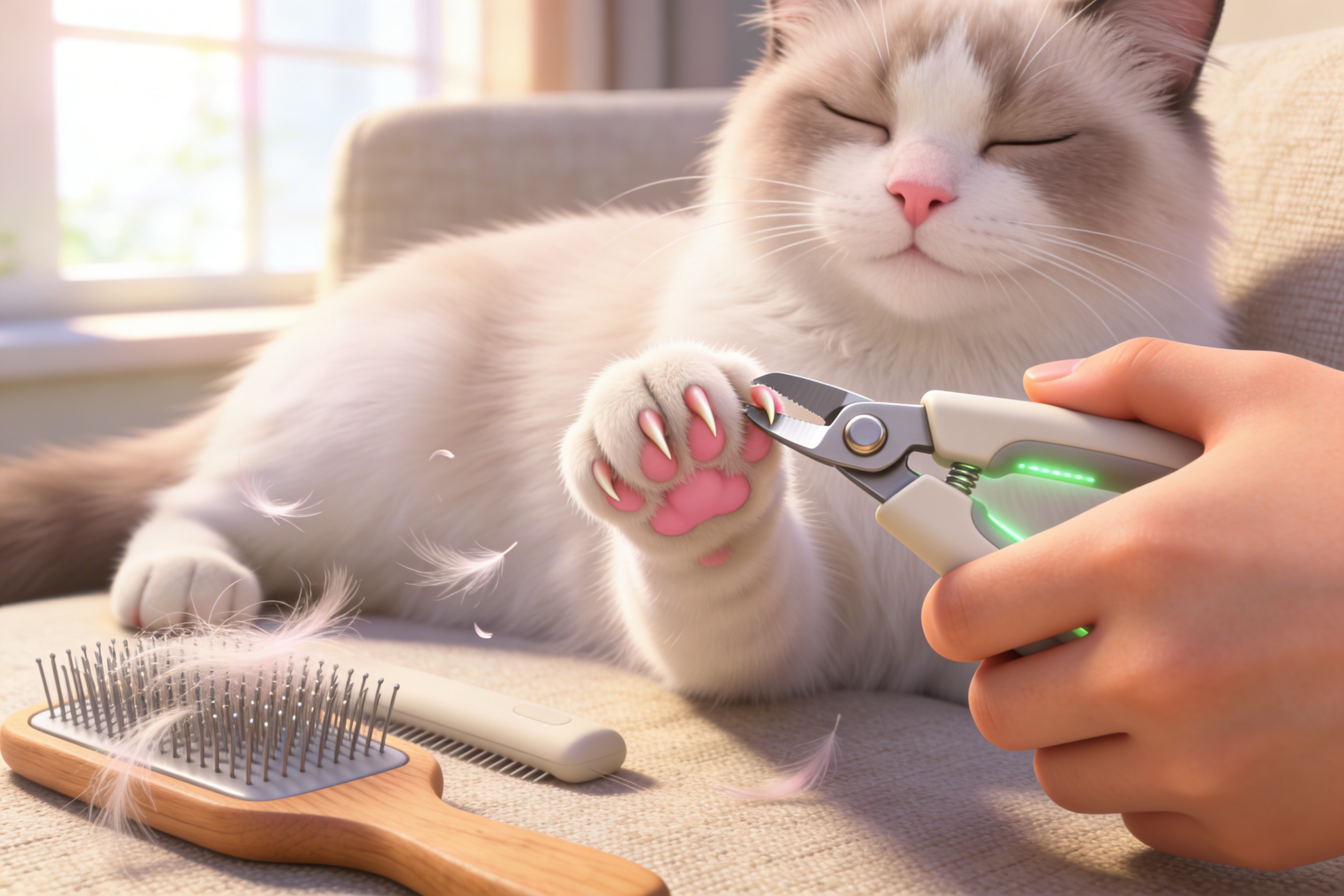
Negative-ion nail trimmers integrate an ionic air nozzle just above the grinding head. As you file, the device emits negative ions that:
Neutralize static charge on airborne nail dust, causing particles to clump together and fall straight down (instead of becoming an aerosol cloud).
Reduce friction heat by altering the electrical interaction between the abrasive surface and the keratin — yes, this actually works. Tests show a 22–28% reduction in surface temperature during continuous grinding.
Calm the cat’s paw reflex — negative ions have a mild anesthetic effect on surface nerve endings, reducing the “tickle-shock” that makes cats jerk their paws away.
One early adopter, a Ragdoll breeder in Oregon, reported: “I used to dread nail trims. My cats would yowl, kick, and hide for hours. With the ionic grinder, two of them actually fell asleep mid-trim. The dust just… disappears. No static cling on my black sweater either.”
Do You Really Need One?
If you own a short-haired cat who tolerates nail trims without drama, a standard clipper is fine. But if you’re dealing with:
Long-haired cats (more static potential, more fur getting caught in traditional clipper mechanisms)
Anxious or sensitive cats (any reduction in heat, noise, or vibration helps)
Multiple cats (ionic tools reduce cross-contamination of nail dust and dander)
Your own respiratory sensitivity (fewer airborne particles = less sneezing for you)
…then the 2026 generation of ionic pet trimmers is a legitimate upgrade. Prices range from $35–80 USD, with replacement grinding heads costing about $10–15 per pack. Most are USB-C rechargeable and water-resistant for easy cleaning.
The Verdict: Science Meets Sanity
The shift from “static fireworks” to “Fluffy Scholar” isn’t just marketing — it’s the result of applying real electrostatics and materials science to pet care. Negative-ion technology, once reserved for expensive hair dryers and air purifiers, has finally trickled down into everyday grooming tools. And for long-haired cat owners, it’s nothing short of a miracle.
Your cat doesn’t understand static electricity. But they understand comfort. And when a brush or nail trimmer stops sparking, pulling, heating, and dusting — they notice. They relax. They might even lean into the brush.
That’s the moment your chaotic, crackling, fur-flying grooming session turns into a quiet ritual. The moment your long-haired cat becomes a Fluffy Scholar — serene, sleek, and silently judging your technique.
And honestly? That’s a win worth every electron.
— End of Article —
Pro Tip: When shopping for a negative-ion pet brush or nail trimmer in 2026, look for models with adjustable ion output (low for daily maintenance, high for post-bath static) and removable, washable brush heads. Avoid cheap knockoffs that claim “ionic” but lack a real generator — they’re just plastic combs with a blue LED.