From “Can I Cut It?” to “Can I Cut It Safely?”: How the Pet Nail Clipper and Grooming Tool Market Is Entering a Precision Era
The Bloodline Problem: Why Basic Clippers Fail the Modern Pet Owner
Anyone who has ever trimmed a dog’s nails understands the stakes. Inside each nail is the quick—a sensitive, blood-rich core that, if cut, causes pain, bleeding, and a lasting aversion to grooming. For pets with dark or black nails, the quick is invisible. The owner is essentially guessing.
This is not a niche frustration. It is a universal pain point, particularly among owners of breeds with black nails—German Shepherds, Bullmastiffs, Labradors, and countless mixed breeds. A review of LED-equipped clippers on Amazon reveals a consistent theme: owners describe the tool as “a game changer” specifically because it allows them to see what they are doing. One reviewer with a Bullmastiff noted that while the light does not penetrate completely opaque black nails, it still illuminates the nail surface and provides a meaningful safety margin. The very fact that owners are writing paragraphs about a nail clipper’s safety features signals a shift in what the category is expected to deliver.
The commercial response has been the integration of LED illumination into nail clipper design. These tools cast light directly onto the nail, revealing the bloodline in lighter and semi-translucent nails. Some models pair the light with an adjustable safety guard—a physical stop that limits how much of the nail can be clipped in a single stroke. The combination addresses the two core fears: seeing the quick, and preventing the blade from reaching it.
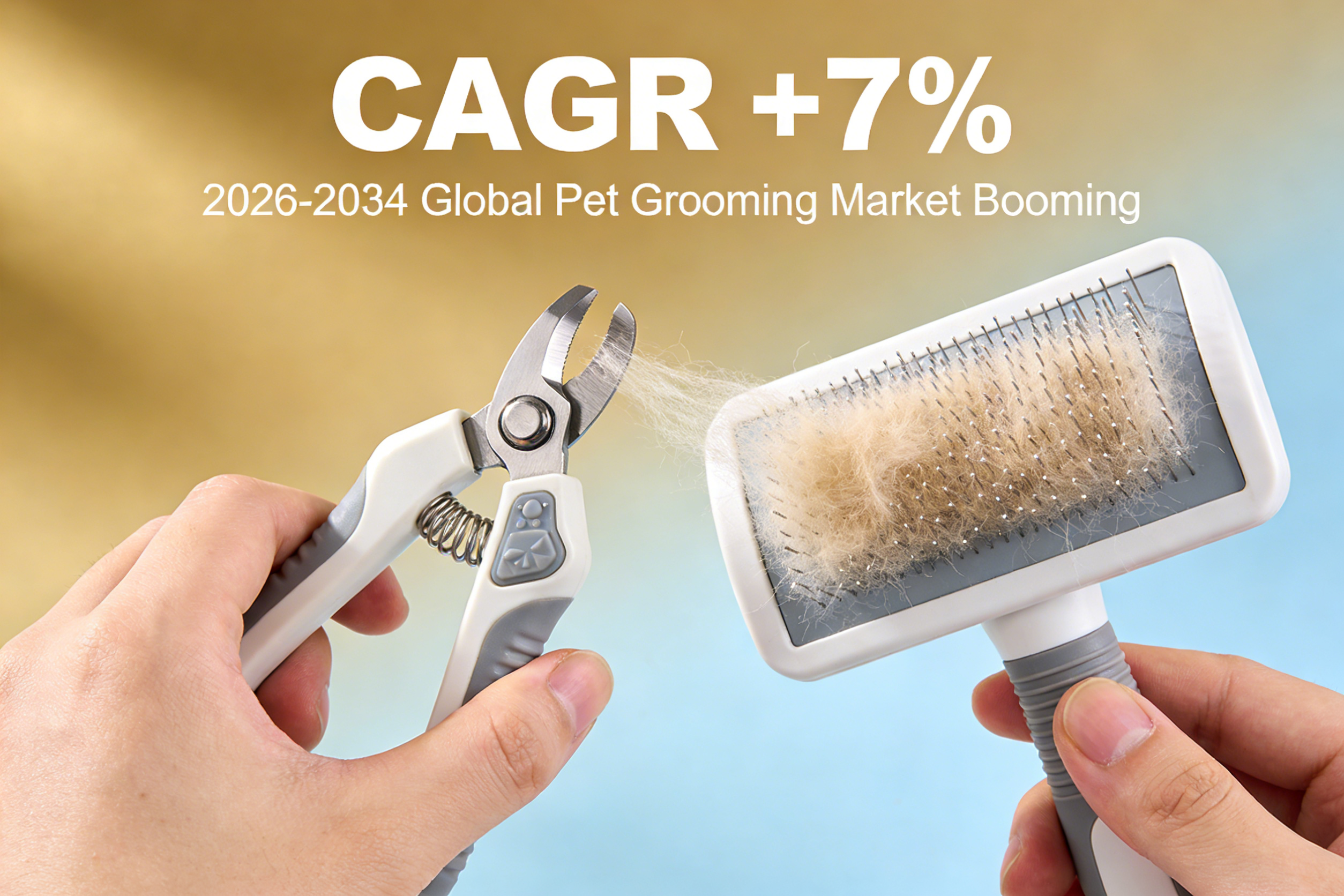
The market data supports this premiumization trajectory. Pet grooming products in the United States are forecast to grow at a 5–7% compound annual rate through 2035, with premium and natural product segments expanding even faster at 7–9%. Consumers are not simply buying more grooming tools; they are buying better ones. The medium-priced segment, defined by a balance of quality and affordability, captured nearly half of the North American market in 2025. LED clippers sit squarely in this premium-value zone—expensive enough to signal quality, accessible enough to reach beyond professional groomers into the home-grooming mainstream.
The De-Shedding Brush and the Quantification of Cleanliness
The evolution of the grooming brush tells a parallel story. Where the nail clipper addresses safety anxiety, the de-shedding brush addresses a different but equally powerful consumer desire: measurable results.
The dominant marketing claim in this segment is now strikingly specific. The Refuresh de-shedding brush, for example, claims to reduce shedding by up to 99%. This is not vague language about “less hair” or “cleaner floors.” It is a number—quantified, verifiable in the consumer’s lived experience. The brush’s design supports the claim: a double L-shaped or C-shaped tooth structure engineered to grip and remove loose undercoat without pulling healthy fur or irritating the skin.
The operational logic is straightforward. A de-shedding tool that removes 99% of loose fur does more than protect the sofa. It reduces airborne allergens, lessens the frequency of vacuuming, and—crucially for the pet—reduces the discomfort of matting and the risk of skin irritation from trapped moisture. The brush becomes not just a grooming tool but a home hygiene device. Reviews of the Refuresh emphasize that regular brushing “avoids pet odor” and “keeps your home clean and free of hair”.
This is the “precision” promise in a different form. The consumer is not merely brushing the pet. They are executing a maintenance protocol with a predictable, quantifiable outcome. The grooming session becomes less about occasional intervention and more about routine, low-stress preventive care—a behavior shift that the pet industry has actively encouraged through subscription models and DTC branding.
The Anxiety Factor: Designing for the Animal’s Nervous System
The most significant design constraint in modern pet grooming tools is not the blade or the bristle. It is the animal’s tolerance for handling.
Pet anxiety during grooming is not a minor inconvenience. It is a welfare concern, a safety risk for the handler, and a barrier to consistent home grooming. A pet that panics during nail trimming may never accept the process, forcing the owner to either sedate the animal, pay for professional grooming, or neglect the nails altogether—which leads to overgrowth, joint pain, and mobility issues.
The market has responded with tools engineered around sensory reduction. The design language has shifted from “cutting power” to “low-stress handling.” Nail clippers now emphasize quiet operation, vibration dampening, and lightweight construction. One rechargeable clipper-grinder combination on Amazon is described by a reviewer as “much quieter than I expected, which helped keep my pet calmer during nail trims”. The USB-rechargeable format, now common in mid-tier and premium products, eliminates the cord—which pets may associate with prior stressful experiences—and allows the owner to work at a comfortable pace without the tether of a power outlet.
For de-shedding brushes, the anxiety reduction comes through gentleness. The Refuresh design is explicitly marketed as “gentle yet effective,” with teeth spaced to avoid pulling live fur or scraping skin. Ergonomic handles reduce wrist strain for the owner, enabling longer, more patient brushing sessions. The tool is designed so that the pet experiences something closer to a massage than a grooming chore—an important distinction, since the goal is to make brushing a positive, repeatable routine rather than a struggle.
What the Market Data Is Actually Saying
The premiumization of grooming tools is not occurring in a vacuum. It is embedded in a broader structural shift in pet care spending. In the United States, pet grooming products generated approximately $5.1 billion in 2025, representing 82.1% of the North American market. Growth is projected to continue at 5–7% annually, with per-pet spending—not pet population—driving the expansion.
Two consumer segments are fueling the demand for precision tools. The first is the “premium pet product enthusiast”—a shopper who treats pet care as an extension of personal wellness and expects tools to perform with the same reliability as their own kitchen knives or skincare devices. The second is the “new pet owner,” particularly first-time puppy or kitten owners, who are highly motivated but lack confidence. For this segment, the LED clipper and the quantified de-shedding claim serve as training wheels—they reduce the cognitive and emotional burden of doing something that feels risky.
Professional groomers and veterinary clinics occupy a different tier. They evaluate tools on cost-per-use economics, blade longevity, and the ability to handle high volume without fatigue. Their influence, however, is not confined to the salon. Veterinarian recommendations and groomer-endorsed brands serve as trust signals that cascade into the consumer market. A clipper that a groomer trusts becomes a clipper that a nervous owner will pay a premium for.
The Road Ahead: Precision as the New Baseline
The trajectory is clear. The pet nail clipper and the grooming brush are being pulled toward the same destination from different starting points: tools that allow the owner to do something difficult, do it well, and do it without causing harm.
For nail clippers, the next frontier is likely refinement of the LED system. Current limitations—light that fails to penetrate completely opaque black nails, or positioning that obstructs the view—are the primary complaints in product reviews. A clipper that reliably reveals the quick in dark nails would represent a genuine breakthrough. Until then, the safety guard and the illumination feature remain meaningful but imperfect safeguards.
For de-shedding brushes, the quantified claim has become table stakes. The 99% figure is no longer differentiating—it is expected. The next competitive layer will likely involve material innovation (biodegradable bristles, recycled handles), integration with digital tracking (brushing frequency, coat condition), and subscription models that turn a one-time purchase into an ongoing care regimen.
What unites both categories is a single insight that the market has finally embraced: pet owners are not buying tools. They are buying confidence. The confidence that they will not hurt the animal they love. The confidence that their home will stay clean. The confidence that grooming is something they can handle, on their own, without stress.
The clipper that just cuts is no longer enough. The clipper that cuts precisely, safely, and quietly—that is the product the market now demands.