How Chinese Pet Nail Clippers Became an Unlikely Export Star
A Market That Refuses to Cool Down
The global pet grooming tools market was valued at roughly $2.2 billion in 2025, with projections putting it above $3.4 billion by 2032, growing at a steady 6.3% compound annual rate. Nail clippers and trimmers represent a core slice of that market, driven by the same fundamental forces reshaping pet care worldwide: more pets, more spending per pet, and a cultural shift toward treating animals as family members rather than property.
What’s happening in China, and in Ningbo specifically, is that manufacturers have moved aggressively to capture that demand. Trade records show Chinese-origin nail clippers flowing through major ports toward buyers in the United States, Europe, Japan, and increasingly Southeast Asia. The export-to-import ratio tells its own story: China exports four to six times more portable pet nail clippers than it imports, reinforcing its role as the dominant global supply base.
The Ningbo numbers fit neatly into that pattern. The city’s pet product exporters, many of them small and mid-sized operations, have found that grooming tools offer something that smart collars and connected feeders sometimes lack: universal, non-negotiable demand. Every cat needs its nails trimmed. Every dog owner eventually confronts a broken dew claw or overgrown nail. These are not discretionary purchases. They are maintenance.
From Commodity to Scenario-Specific Design
The more interesting development is not the volume but the evolution. Pet nail clippers used to be a commodity. You bought a pair, used it until it dulled, and replaced it. They came in one or two sizes. They were designed for “pets” in the abstract.
That abstraction is breaking down.
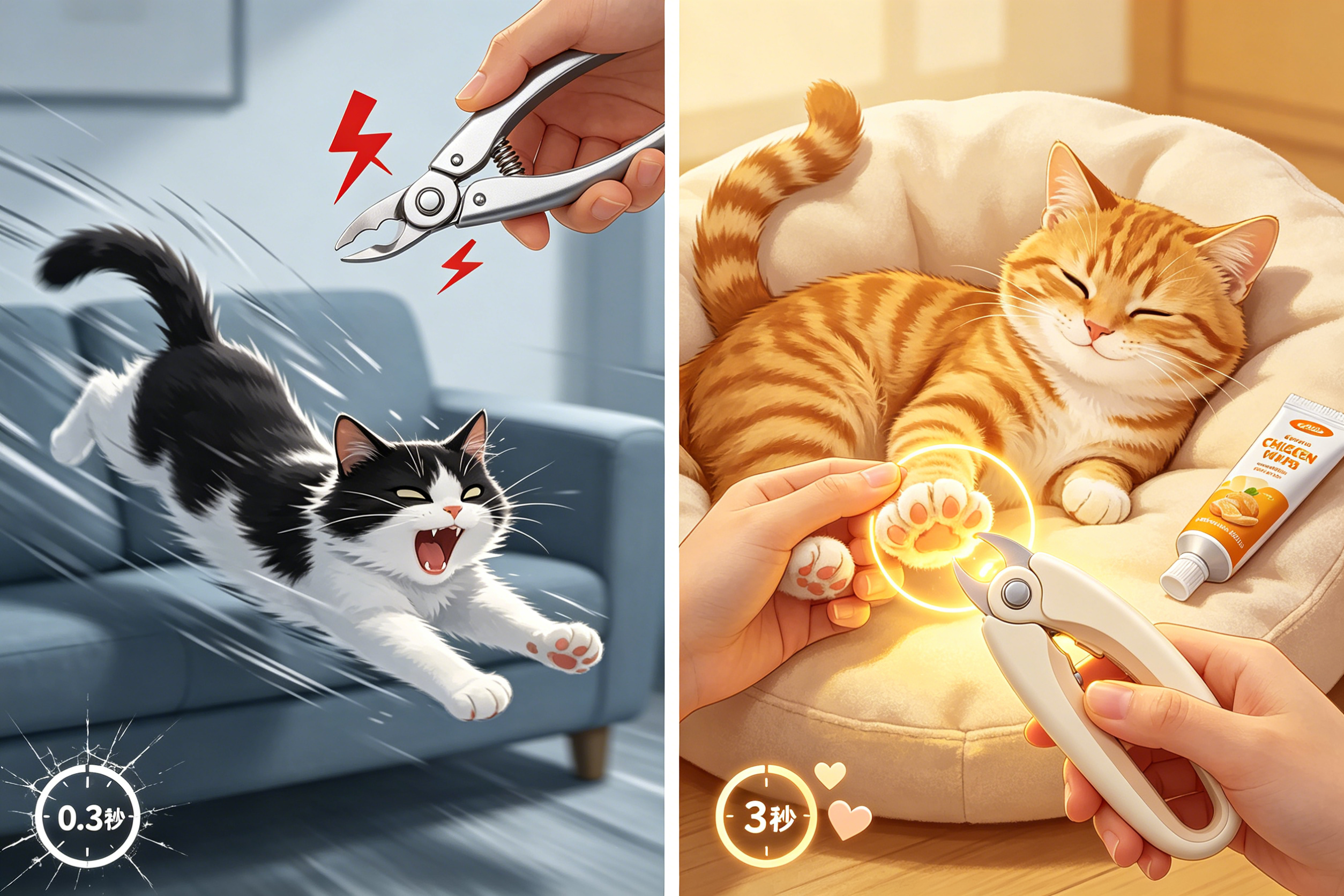
Manufacturers are now segmenting their clipper lines with a specificity that mirrors the broader fragmentation of pet care. There are clippers for small breeds with proportionally thicker nails, and clippers for senior dogs whose nails become brittle and prone to splitting. There are guillotine-style clippers for cats, scissor-style trimmers for rabbits and guinea pigs, and precision tools for birds and reptiles whose nails require a different angle of approach entirely. The emergence of the exotic pet supplies market, growing at 7.3% annually and projected to reach $3.46 billion by 2034, has created a new frontier for product differentiation.
Trade data confirms this shift toward specialization. Export records from Chinese suppliers show shipments explicitly labeled with product tags like “cat nail clipper,” “nail clip w/ guard,” and “guillotine clipper,” often bundled with grooming combs, slicker brushes, and undercoat rakes in the same consignment. The clipper is no longer sold alone. It is sold as part of a grooming system, targeted at a specific animal type and a specific care need.
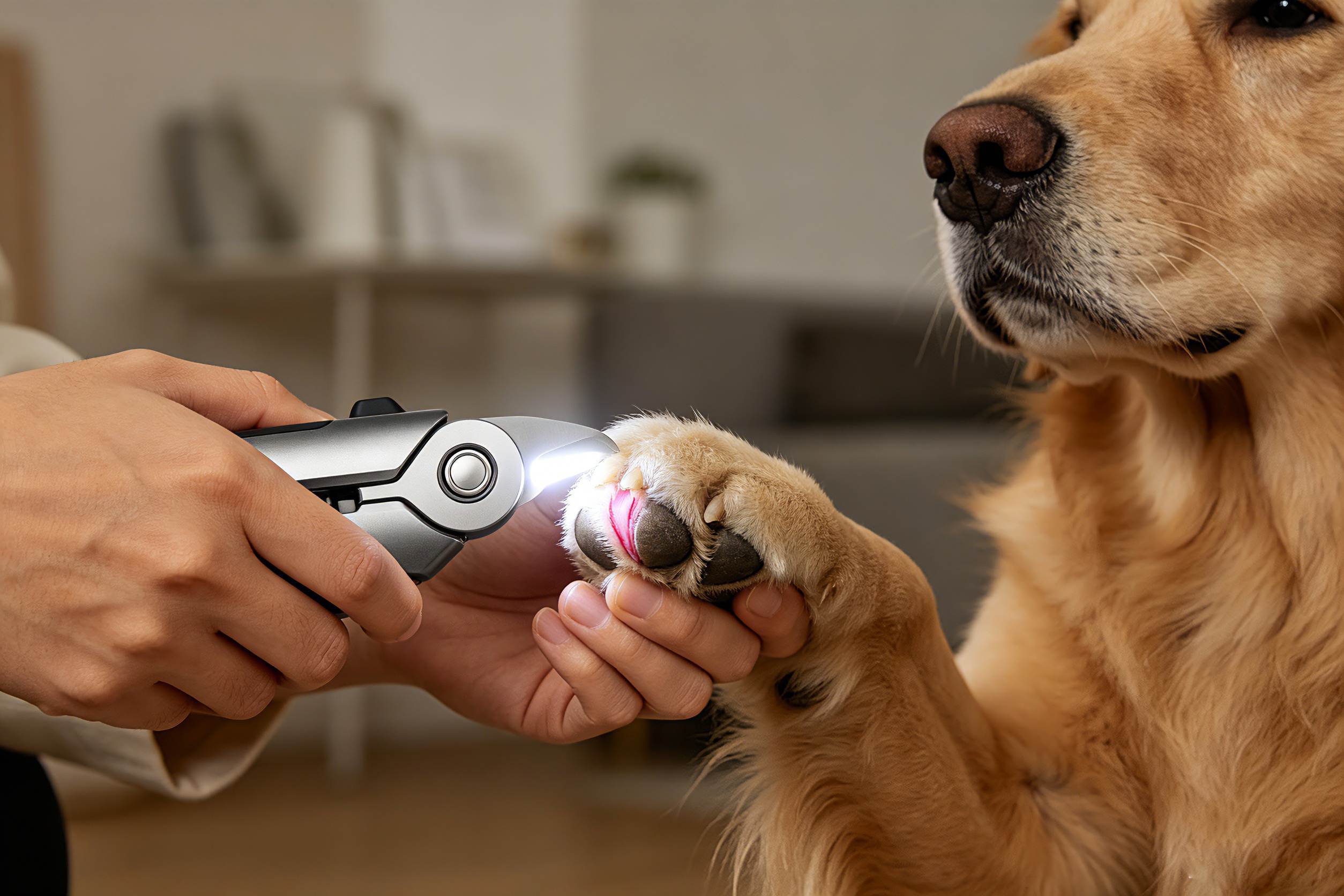
Safety features have become a design battleground. Quick guards, which prevent over-trimming and the bleeding that terrifies novice pet owners, are now standard on mid-tier products. Ergonomic grips, non-slip handles, and locking mechanisms that keep the blade closed when not in use have moved from premium imports to mainstream Chinese-made goods. The clippers coming out of factories in Zhejiang and Guangdong today are not the same tools that defined the category a decade ago.
The Exotic Pet Wildcard
One of the less discussed but potentially significant drivers behind the nail clipper boom is the rise of exotic pets. The global exotic pet supplies market, valued at nearly $2 billion in 2026, is growing faster than the traditional pet supplies sector. Reptiles, birds, small mammals, and amphibians require grooming tools engineered for entirely different anatomical realities.
A parrot’s nail is not a dog’s nail. A bearded dragon’s claws present different challenges than a hamster’s. The grooming and accessories segment within the exotic pet market is projected to see the highest growth rate of any product category, driven by owners who are increasingly conscious of hygiene, comfort, and species-appropriate care.
For Chinese manufacturers, this represents an opportunity that plays directly to their strengths. The supply chain flexibility that allows a factory to pivot from dog clippers to cat clippers to reptile trimmers within the same production line is not easily replicated elsewhere. The Ningbo region’s dense network of component suppliers, mold-makers, and assembly operations means that a new product variant can move from design to shipping container in weeks rather than months.
Why Ningbo, Why Now
Ningbo’s export surge is not accidental. The city sits at the center of China’s eastern manufacturing belt, with deep connections to the port infrastructure that moves goods to Long Beach, Seattle, Rotterdam, and Yokohama. Customs data shows pet grooming tools moving through Ningbo and Shanghai in steady volumes, with buyers including major North American pet retailers and veterinary suppliers.
The region has also benefited from a broader strategic shift among Chinese pet product exporters. Where earlier generations focused on OEM manufacturing for Western brands, many Ningbo-area companies now sell directly to overseas consumers through e-commerce platforms. This direct-to-consumer model gives them something their predecessors rarely had: pricing power and consumer insight. They can see what buyers complain about in reviews, what features they request, and what they return. That feedback loop accelerates product iteration in ways that traditional wholesale relationships never could.
Customs authorities have supported this shift with practical measures. A “green channel” for pet product exports and a same-day customs clearance mechanism for export declarations have reduced the friction that once slowed shipments. For a category where order volumes are often moderate and delivery windows tight, those efficiency gains matter.
The Road Ahead
The trajectory seems clear. The global pet population continues to rise. The human-animal bond continues to deepen. And the willingness of pet owners to spend on grooming, hygiene, and preventive care continues to grow.
Nail clippers will never be a glamorous export category. They do not generate viral moments on social media or attract venture capital headlines. But they represent something perhaps more durable: a fundamental, recurring need that exists in every household with a pet, across every market, in every season. The 21.7% export growth in Ningbo is not a spike. It is a signal that Chinese manufacturers have found a category where reliability, innovation, and supply chain depth translate directly into global market share.
For the factories churning out clippers in Zhejiang, the lesson is straightforward. The product is small. The opportunity is not.