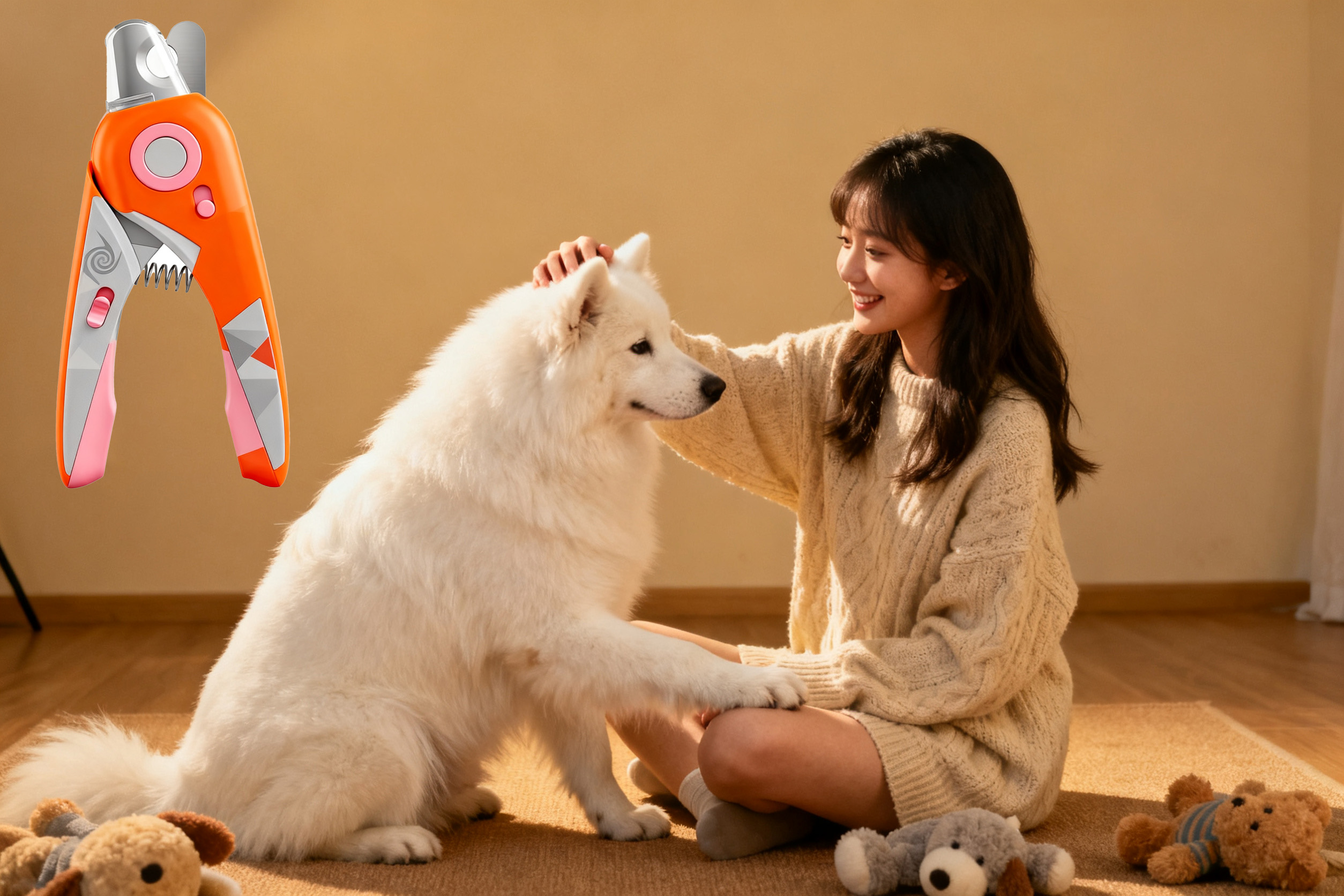
The Gentle Revolution: How Sub-50dB Tech and Anti-Clip Safety Are Quietly Redefining the Pet Nail Clipper
The 50dB Threshold: When “Quiet” Becomes a Medical-Grade Claim
The number 50 decibels appears with striking consistency across the product pages of the brands gaining traction in Western markets. Oneisall’s flagship grooming kits and paw trimmers advertise operating noise below 50dB, with their dedicated paw trimmer claiming under 35dB in working mode . Neakasa positions its grooming vacuum kits at 50-52dB in eco mode, explicitly marketing the “tranquil” experience as a core feature .
This isn’t marketing fluff. It reflects a real technical understanding of feline and canine acoustic sensitivity. A conventional pet clipper often operates in the 60-70dB range—roughly equivalent to a lively restaurant conversation or a vacuum cleaner. For a species that can hear frequencies up to 45,000 Hz (compared to a human’s 20,000 Hz), that noise is not merely annoying. It triggers a sympathetic nervous system response: dilated pupils, elevated heart rate, and a fight-or-flight decision that makes nail trimming a two-person wrestling match.
The engineering behind the sub-50dB claim is non-trivial. It requires brushless motors with reduced vibration profiles, acoustic dampening within the housing, and in Neakasa’s case, a genuinely clever innovation: the one-click suction system where the fan remains completely silent during grooming and only activates when the user presses the hair suction button . This is a technical differentiator that white-label factories in Yiwu cannot easily replicate without a genuine R&D investment.
From “Sharp” to “Safe”: The Anti-Clip Engineering Arms Race
Quiet operation addresses the auditory stress. But the second axis of the low-stress revolution addresses a more visceral fear: the quick.
Cutting the quick—the sensitive blood vessel running through the nail—is the single most traumatic event in a pet’s grooming history. One bad clip can create a lifelong aversion to having paws touched. The market has responded not with marketing language, but with physical engineering.
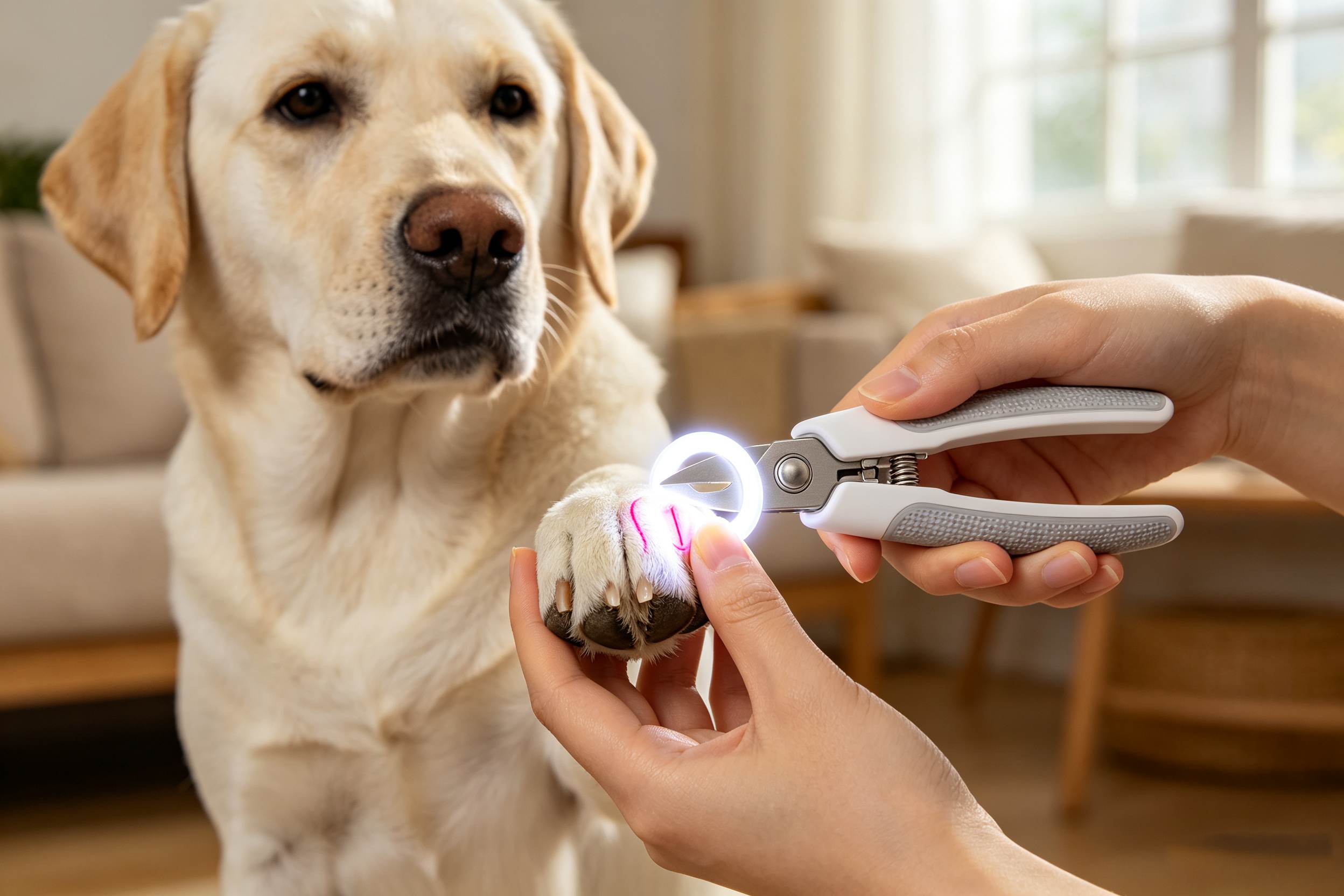
The most significant development in manual clipper design is the safety guard mechanism. Bissell’s entry into the category features an angled, adjustable safety guard that physically blocks the nail from protruding beyond a safe cutting point . Oneisall’s 4-in-1 kits incorporate LED lighting specifically to illuminate the quick, particularly valuable for pets with dark nails where the vein is invisible to the naked eye . The yayaboqu clipper takes this further with a 2mm circular safety guard aperture that positions the nail for a clean cut while leaving the quick untouched .
Even more sophisticated is the funnel-and-stop architecture seen in patented safety clipper designs. A funnel guides the nail to the cutting location, while a safety stop behind the blade creates a physical wall that prevents the nail tip from entering the cutting zone while simultaneously positioning the quick at a natural stop before the blade can reach it . This is not a feature that appears on $5 clippers. It is precision tooling, and it changes the psychological calculus for the pet owner: instead of “I hope I don’t hurt them,” the experience becomes “The tool won’t let me hurt them.”
The Behavioral Economics of Low-Stress Grooming
Why does this matter commercially? Because the pet nail clipper category is fundamentally under-penetrated due to avoidance. A significant percentage of pet owners simply do not trim their pets’ nails at home. They pay $15-25 per groomer visit, or they let the nails grow to the point of discomfort and secondary health issues.
The low-stress technology trend removes the emotional barrier to entry. When a product promises “under 50dB” and “prevents cutting the quick,” it is not selling a tool. It is selling confidence to a nervous owner. And nervous owners are willing to pay a premium.
This is the strategic insight that separates Oneisall and Neakasa from the white-label crowd. These brands are not competing on blade steel grades or handle materials. They are competing on outcomes: a pet that doesn’t run away, an owner who doesn’t feel guilty, and a grooming session that ends with treats instead of trauma.
The data supports this. The premium feature-enhanced tier of the portable pet nail clipper market—typically $16-25, incorporating safety guards, LED lighting, and quieter motors—is where domestic brands are increasingly competitive with established international names . The ultra-value tier below $7, by contrast, is a race to the bottom with no loyalty and no repeat purchase logic beyond price.
The Technical Moat: Why White-Labels Can’t Keep Up
The sub-50dB and anti-clip trend creates a genuine barrier to entry for low-cost manufacturers for three reasons:
First, acoustic engineering requires R&D. Reducing motor noise without sacrificing torque (Oneisall’s motors run at 6500-7000 RPM ) requires precision balancing, upgraded bearings, and sound-dampening materials. A factory optimized for $5 clippers cannot simply “add quiet” without a fundamental redesign.
Second, safety features require tooling investment. An adjustable safety guard or a precision-molded funnel is a different mold, a different assembly process, and a different quality control standard. The patent filings around funnel-and-stop mechanisms show that this is protectable IP, not a commodity feature .
Third, the brand narrative compounds. When Oneisall accumulates thousands of reviews saying “my anxious cat let me trim her nails for the first time” , that is a trust asset that no white-label listing can replicate. The reviews are not about the product. They are about the relationship between the owner and the pet. That is emotional territory that price-cutters cannot invade.
The Future: Grooming as a Trust-Building Ritual
The trajectory is clear. The next generation of pet nail care products will be evaluated not by cutting force but by behavioral outcomes. Did the pet stay calm? Did the owner feel safe? Did the session end without a yelp?
Neakasa’s Japanese market feedback tells the story. Reviews of their P0 low-noise grooming system describe cats who “used to run away from the vacuum” now accepting brushing sessions, and owners marveling that “the quiet sound means my three cats let me brush them without fear” . One reviewer noted that the gentle sound was “a pleasant surprise” compared to the “pulling and snagging” of previous clippers .
This is the real product being sold: a moment of trust between a human and an animal. The sub-50dB motor and the anti-clip guard are merely the technical means to that end.
For brands competing in the cross-border pet supplies space, the strategic imperative is clear. The low-stress trend is not a niche. It is the premiumization engine of the entire nail care category. The brands that win will be those that can say, with technical credibility and emotional resonance: “We built this so your pet wouldn’t have to be afraid.”
That is a promise worth paying for.