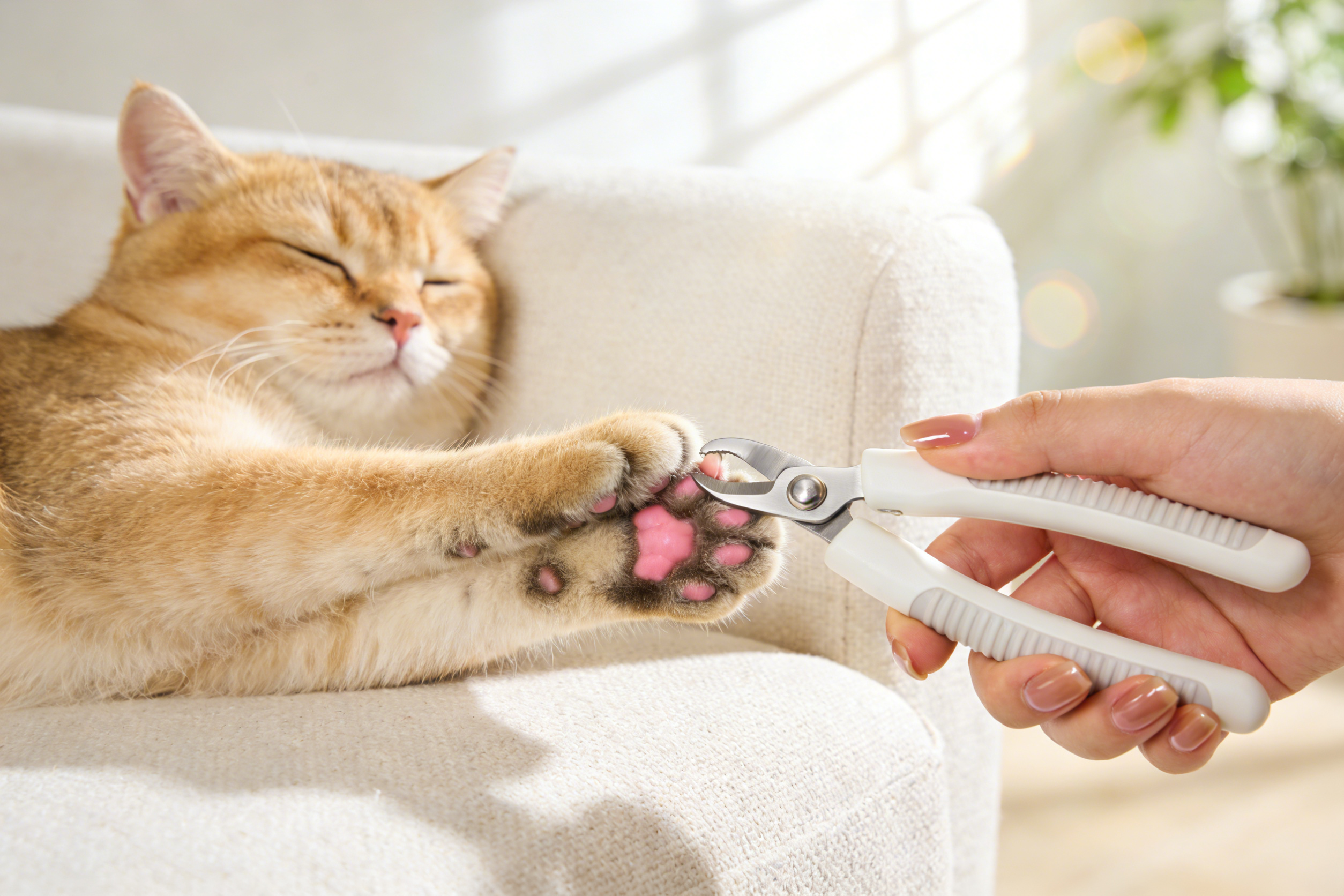
The Quiet Export Boom: How Chinese Pet Nail Clippers Became a Scenario-Driven Global Hit
From Standard SKU to Scenario-Specific Tool
The conventional narrative about Chinese-made pet nail clippers is one of volume: low-cost, high-output, sold in bulk to overseas distributors who slap on a private label. That narrative is now incomplete. The market signal from Ningbo suggests that the clippers and combs moving through export channels are increasingly differentiated by use case—species, size, coat type, and even the setting in which grooming occurs.
This aligns with a broader pattern in the global grooming tools market. Market research indicates that the nail clippers segment is expected to witness the highest growth rate within the pet grooming and at-home grooming tools category, driven by increasing awareness of pet hygiene and the growing preference for at-home grooming among pet owners . The same research identifies manual grooming tools—including nail clippers, brushes, and combs—as a distinct segment from powered appliances, suggesting that even in an era of electric grinders and smart dryers, the manual precision tool retains a critical place in the grooming kit.
What Ningbo’s export data hints at is that the “manual tool” category is not stagnant. It is being reshaped by the same forces driving the broader pet economy: humanization of pets, the rise of exotic companion animals, and the professionalization of home grooming.
The Exotic Pet Factor
One of the most overlooked drivers in the grooming tools segment is the diversification of pet species themselves. The Ningbo customs brokerage’s observation about “specialized equipment for exotic pets” is not a throwaway line . It points to a structural reality: a nail clipper designed for a Labrador’s thick, hard nails is not appropriate for a rabbit, a guinea pig, a ferret, or a parrot. The geometry of the blade, the curvature of the cutting edge, and the safety guard configuration all need to change.
Chinese manufacturers, particularly those clustered in Zhejiang and Guangdong, have historically excelled at rapid tooling iteration. When overseas buyers begin requesting clippers sized for small mammals, or combs designed for double-coated breeds during shedding season, the supply chain response is measured in weeks rather than months. This agility is difficult to replicate in markets where manufacturing runs are planned on annual cycles.
The export data does not break out nail clippers as a standalone line item, but the logic of the category suggests that the 21.7% overall growth contains a disproportionate share of higher-value, more specialized grooming tools. A generic clipper sold in a blister pack may command a few cents in margin. A scenario-specific clipper—say, a safety-guarded model for kittens, or a heavy-duty compound-lever clipper for large-breed dogs with dewclaw challenges—commands a different pricing tier and a different level of buyer engagement.
The Professional Wash and Care Ecosystem
The pet nail clipper does not travel alone. It is part of a system. The same Ningbo export ecosystem that ships clippers also ships grooming tables, dryers, and the full apparatus of professional pet washing and care. Companies like Ji’er (Zhejiang) Technology, which manufactures pet grooming lift tables and drying cabinets, reported overseas sales growth exceeding 55% in the first half of 2026 . Their drying cabinets were redesigned with better airflow, more rational tray design, and larger internal capacity, with a service life rated at over 30,000 hours .
The significance for clippers and combs is indirect but important. When a pet salon in Europe or a high-volume grooming facility in North America invests in Chinese-made professional equipment, the consumables and hand tools that accompany that equipment often come from the same supply chain. The clipper becomes part of a bundled procurement decision. The comb becomes an accessory to the dryer. The nail trimmer becomes a line item in a wholesale order that also includes lift tables and restraint systems.
This is how a “hidden hit” emerges. It does not announce itself with a single viral product. It accumulates through the quiet expansion of the adjacent product ecosystem—the tools that professionals reach for once the big equipment is installed.
What the Data Does Not Say—and Why It Matters
Customs statistics are blunt instruments. They count value and weight, not design intent or market positioning. The 21.7% growth figure for Ningbo pet supplies does not tell us whether the average export price of a nail clipper rose, fell, or stayed flat. It does not reveal whether the mix shifted toward higher-margin professional tools or toward higher-volume discount channels.
But the qualitative signal from the industry is consistent: the category is moving toward segmentation. The buyers are asking for specificity. The manufacturers that can deliver a clipper calibrated to a specific species, a specific nail type, and a specific grooming context are the ones gaining traction. Those still shipping one-size-fits-all tools are competing on price alone, and that is a race to the bottom that Chinese manufacturers have increasingly little interest in running.
The broader pet grooming kit market is projected to grow at a compound annual rate of around 5.5% through 2032, reaching roughly $843 million . Within that growth, the nail clippers segment’s outsized expected growth rate suggests that the tool-level innovation—blade geometry, safety features, ergonomics, and species-specific design—will be where the competitive battles are fought.
The Takeaway for Global Buyers
For overseas retailers and distributors, the Ningbo data carries a straightforward message: the Chinese pet grooming tool supply chain is no longer a monolith. The same export corridor that produces volume-driven commodity clippers also produces specialized, scenario-engineered instruments designed for the professional and the serious home groomer. The 21.7% growth is not just more of the same. It is a signal that the category is fracturing into tiers, and the upper tier is where the margin and the brand-building potential reside.
The nail clipper, in other words, is no longer just a nail clipper. It is a data point in the story of how Chinese pet product manufacturing is climbing the value chain—one small, precision-ground blade at a time.